

Approx. reading time:
TRIGGER WARNING: This article discusses suicide in detail. If this is a topic you feel uncomfortable reading about, please avoid reading any further. Click here to return to our home page.
If you or anyone around you is experiencing any suicidal ideation, please contact HOPELINE @ 0917–558–4673 (Globe), 0918–873–4673 (Smart) 02–88044673 (PLDT), 2919 (toll-free for Globe and TM). [NCMH Crisis Hotline] Toll-Free Landline: 1553 or 1800–1888–1553 GLOBE / TM: 0917–899–8727 or 0966–351–4518 SMART / TNT: 0908–639–2672 DOH Helpline Directory: https://bit.ly/DOHhelplines
People facing suicidal ideation don’t all look the same. Sometimes they look normal, laughing at jokes and even cracking a few, and sometimes it looks like despair. Sometimes it comes quickly, but you can catch it if you are looking properly. Survival can be an ongoing struggle and many people still face the stigma of admitting to needing help. But they need help, and if you are helping them, then there is a good chance you need help. If you are going through this, you are not alone.
Suicide is contagious.
One suicide can create a chain reaction that goes from troubled person to person and snatches them away. There have been studies of suicide clusters in the US, Australia, Japan, and Canada. They emerge after a high-profile suicide. There are some data that show sensationalized reporting can lead to more suicides among vulnerable populations.
We are a vulnerable population. Manila is one of the most stressful places to live. The Pandemic is still on, and there are a million reasons every day why living life is harder than it needs to be. It’s a breeding ground for hopelessness and that’s dangerous.
Suicide contagion is relatively unknown in the Philippines. No major epidemiologic studies exist yet partly because it is a sensitive topic, and partly because of other factors like the lack of research funding and the lack of available professionals. We have to learn how to face this difficult topic, however, because there has been a marked rise in deaths by suicide in the Philippines since the pandemic.
There is something we can do about it though. We can talk.
One way we can address this problem is to change how we talk about suicide. It’s a small battle to win in the war against self-harm, but it’s something we can do to minimize deaths by suicide. We also have to learn how to talk to those who experience suicidal ideation, because what we say in the moment matters.
We are all more than one thing, but suicide (or depression) can often highlight what we perceive as negative aspects of ourselves. The victim can become so laser focused on what’s wrong, they have difficulty seeing what they have to offer. We can help with that.
Suicide Contagion
Suicide is not biologically contagious, like viruses or other pathogens. When there is a death by suicide, however, it can agitate other people who have self-harmed in the past. It can create a chain reaction that leads to more deaths and suicide clusters.
There have been papers published by the medical community showing that suicide clusters rise after high-profile deaths by suicide. Much of this information is new, but if it could prevent even one death, then it’s important that we are all aware of the risk that one suicide creates.
Suicide Clusters
Unfortunately, the death of one person by suicide tends to lead to a spate of suicides around their immediate vicinity. If the suicide is a celebrity or a prominent person, there is a much higher chance that there will be a spike in suicides after their death. It’s called the Werther effect and it is well documented.
The problem is that reporting on suicide can lead to more suicides if it’s not done properly. Many reporters tend to glamorize the act of suicide or reduce the victim to a traumatic experience or a mental illness.
After the death of Robin Williams, there was a rise in suicides in the United States and Canada. There isn’t data on the suicides here due to the sensitivity of the issue, but if it’s happening all over the world, there is a good chance it could be happening here too. We just aren’t seeing the worst of it.
Change The Conversation
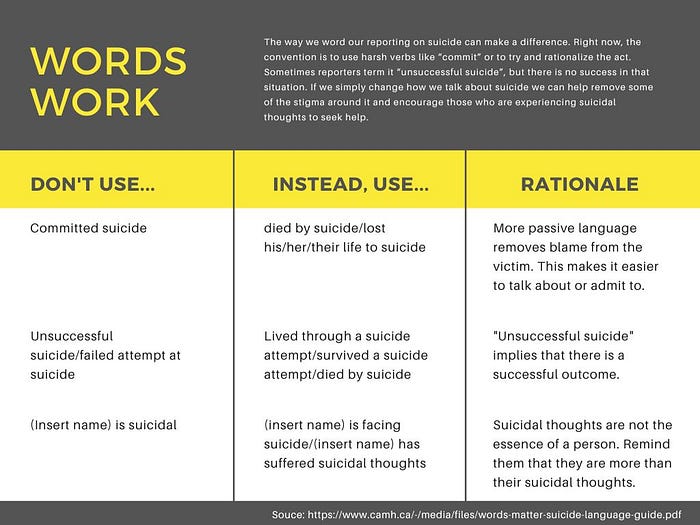
There is good news. There are many ways we can help prevent suicides and not just by directing troubled friends and loved ones to suicide helplines. Just changing the way we talk about suicide can help prevent it. The way we report suicide can make a huge difference.
Some ways we can change the conversation:
- Keep the details of the attempt at a minimum.
- Don’t glamorize the victim’s despair.
- Don’t minimize their suffering to a recent event or a mental illness.
- Direct audiences to support systems and provide resources for anyone going through a hard time.
It would be best to avoid reporting in detail about any notes left behind or how the deed was done. Instead, emphasize hopeful stories of survivors and direct all viewers to resources where they can get the support they need.
The Problem
There is not a lot of “light at the end of the tunnel” in the world right now. The pandemic has ended life as we knew it, the economic consequences are felt all over the country, isolation and depression are on the rise, and all of this is the worst possible environment for someone who is struggling.
We are all battling hopelessness and for some of us, that fight can be harder than others. Alcohol and tobacco consumption have risen during the lockdown. We are all looking for our own ways to cope, so it is important to keep your eye out for warning signs.
Learn The Warning Signs
Not everyone will seek out help on their own, they may need some encouragement from us, their loved ones. We tend to shy away from prying when it comes to suicidal thoughts. It can be scary and your first instinct might be to run, but talking to the person with these thoughts is very important. Being there for them in their worst moment can save a life.
If anyone around you starts displaying the following behaviors you should seek help on how best to support them:
- They mention suicidal ideation
- They experience extreme mood swings
- They increase their use of alcohol or medication
- They withdraw or isolate themselves
- They indulge in reckless behavior
- There is a sudden increase or decrease in sleep
Source: https://988lifeline.org/how-we-can-all-prevent-suicide/
You Need Help Too
If you or anyone around you is displaying warning signs of self-harm, then you should seek help — yes, you. Even the helpers need guidance and the people at Hopeline and other suicide hotlines should be able to counsel you on how best to support your friends and loved ones. Be sure to take some time for self-care as well.
How To Administer First Aid
If anyone you know is going through a hard time or has attempted self-harm in the past, here are some ways you can help them.
The temptation to say something like “hurting yourself is hurting your family and the people around you” or “you have so much to live for “ invalidates their feeling and might even make the person with suicidal ideation feel worse. Instead, try to make them feel as safe as possible.
Ask a few questions to assess their risk factor for suicide:
- Have things gotten so bad you have harmed yourself?
- What kind of thoughts have you been having?
- How often have you been having these thoughts?
- Are you feeling hopeless?
- Do you have a plan on how to do it?
- How are you going to go about it?
- Do you have a backup plan?
- Have you practiced?
If you determine that they are going through a particularly intense period do not leave them alone. Make sure they are accompanied at all times, even if it’s just sitting with them. Show them that they are loved and cared about.
If you can’t stay with them, find another person in their circle and watch them in shifts. They should not be left alone. Remove from their vicinity all sharp objects and other instruments that could cause harm like guns or pills.
When you have a moment, be sure to get help yourself. Chances are, you are not a professional and you may be overwhelmed. There is someone for you to speak to as well. Call HOPELINE @ 0917–558–4673 (Globe), 0918–873–4673 (Smart) 02–88044673 (PLDT), 2919 (toll-free for Globe and TM).
OR: [NCMH Crisis Hotline] Toll-Free Landline: 1553 or 1800–1888–1553 GLOBE / TM: 0917–899–8727 or 0966–351–4518 SMART / TNT: 0908–639–2672 DOH Helpline Directory: https://bit.ly/DOHhelplines
Conclusion
There are small things we can do and there are big things we can do — and while suicide contagion is a relatively new concept to learn about if we can prevent even one suicide it will be enough. The least we can do is be more mindful about how we talk about it because suicide is catching and even one can put more people at risk.
If you or anyone you know is experiencing suicide ideation, there are ways to help them and prevent a tragic outcome. The best thing to do is to seek help for yourself and your loved one. Remember the principle of sei-katsu-sha, we are all multifaceted beings, and suicidal thoughts are only one part of a whole person. You, and the ones you love, are bigger than these thoughts.
AGAIN THAT PHONE NUMBER TO REACH IS: HOPELINE @ 0917–558–4673 (Globe), 0918–873–4673 (Smart) 02–88044673 (PLDT), 2919 (toll-free for Globe and TM).
OR: [NCMH Crisis Hotline] Toll-Free Landline: 1553 or 1800–1888–1553 GLOBE / TM: 0917–899–8727 or 0966–351–4518 SMART / TNT: 0908–639–2672 DOH Helpline Directory: https://bit.ly/DOHhelplines
Photo by monicore: https://www.pexels.com/photo/red-withering-rose-at-daytime-136347/
 Journalixm