
Approx. reading time:
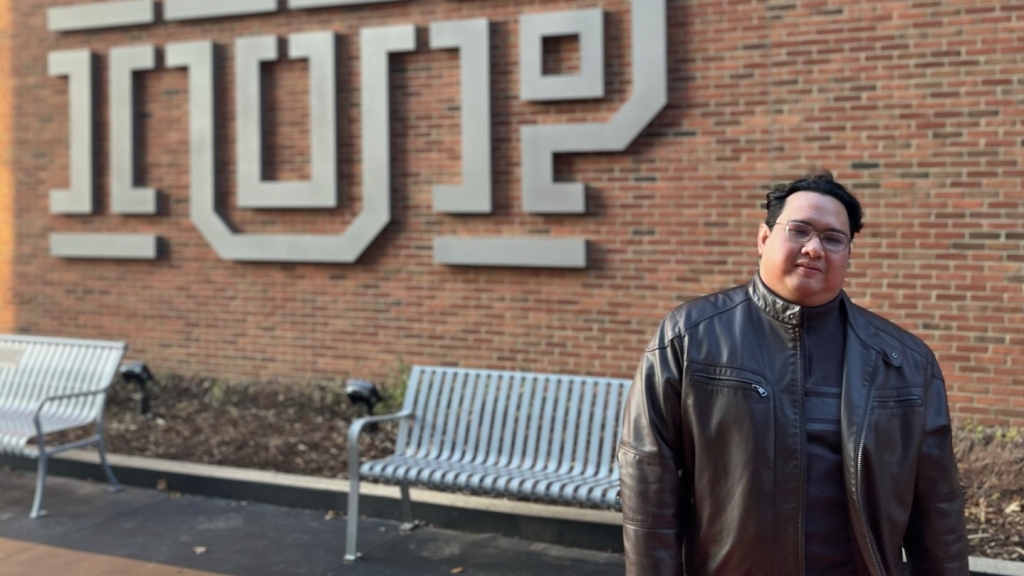
Marco Ramos is like any other adult. He is a student, he wears a lot of hoodies, and you hardly even notice the cane. He is currently pursuing his Ph.D. in literature which means he reads over 1000 pages a week. That’s a lot of reading, especially for a blind guy.
Marco is able to achieve all of this with functionally no eyesight. He can sometimes sense light, but he’s learned not to rely on it. He was diagnosed with a condition when he was born that affected his retinas and he was always prepared to lose his eyesight. When he was in his 20s he lost it almost completely.
That didn’t stop him. He is currently at the Indiana University of Pennsylvania on a Fulbright Scholarship, and he is thriving.
He does not want to inspire you. He just wants you to know what it’s like to be blind and what his normal looks like – if you will pardon the pun.
Does He Have A Service Dog?
Unfortunately, he does not have a seeing-eye dog. Not all blind people can afford this service. It’s Php 1.1 million ($ 20,000), and it’s not very prevalent in the Philippines. The rules for seeing-eye dogs aren’t well defined and might even be more trouble than they are worth here.
Service dogs are a privilege that most blind people, especially blind people here, have to live without. But there are other ways for them to be productive and live well.
How Blind People Read
Yes, Marco uses a phone. It’s a smartphone just like ours. He is also always on the internet just like we are. Technology works as Marco’s eyes. There are all sorts of assistive software that allow him to read screens. There are also Facebook groups for blind people that provide alternative text descriptions (or alt text) for memes to keep him up to date.
That might seem like a lot to us but as he says, you get used to it. It becomes normal.
For him, Apple products are a lifesaver. Some people dislike Apple for its branding and its exclusive policies, but apparently, Apple products are a huge help for blind people. There are many apps that help the blind and most of them are on IOS. Their screen reader, the one that comes with the phone actually works really well.
Marco’s trusty assistive software also works well with Apple and the connections between the different Apple products make a huge difference to him. Having to stick to Apple is one of the unforeseen costs of being blind, but at least there are aids that help him in his everyday life. He has apps on his phone that he can use to scan pages for quick reading for something like an article or a menu.
He also has access to audiobooks and many other ways to absorb the written word. He is not that great at reading long works in braille. While we might think braille is the be-all and end-all of how the blind read, that is not the case. More about braille later.
Marco is able to take notes. He has a braille kit that he carries around that he uses to jot down anything that might come to mind. To be fair, he has to think through what he wants to write and write it backwards so the important bits of the braille are properly aligned. That might seem like a lot to us but as he says, you get used to it. It becomes normal.
Does He Have Special Powers?
Aside from thinking in braille backwards? No. But losing his sight means that he processes some things differently. He has a measuring tape with staples demarcating each inch so he can feel how far apart things are when he is buying furniture or clothes.
He, however, is no Daredevil.

He can’t “see” via soundwaves or spatial awareness. In fact, he is well-known for being bad at spatial awareness. He was bad at it before he was blind, and it’s still a weakness now.
He also has a keen sense of humor. But some of us normies have that too.
Marco Loves Movies
His favorite is the Matrix. He loves the experience of going to films with friends and watching the same thing so they can all talk about it after.
He watches movies through audio descriptions or described video service. They are usually included with the big blockbuster movies. All he has to do is call ahead and let the movie theater know that he is coming and he will need a headset. Then he can be just like anyone else watching the latest superhero release.
The only problem is that Marco loves arthouse movies and Filipino movies, but those don’t usually come with audio descriptions which makes it hard for him to enjoy them properly.
If there was one takeaway from reading about Marco, it should be that we need more audio descriptions and described video services in our movies. They are such a small addition and they make a huge difference to our blind brethren.
Let Them Read Braille
If you were like me, you thought that Marco mostly reads books in braille. Braille is one way that blind people read – it is a series of bumps that signify letters.
Braille, however, is unwieldy AF. It takes a ton more space to write in braille so it’s really hard to read full novels that way. A single braille bible would take 40 books to complete and stacked would be two meters tall.

That’s just one book. The storage requirement implications for the kind of material Marco has to read every week are mind-boggling. Anyone have a spare building to house his fall reading list?
Braille is so hard to work with, there is a debate raging in the blind community about how useful braille even is. Some people don’t learn it, preferring instead to let go of the idea that words have to be written things.
Marco does read and write in braille. It is extremely useful for jotting down quick notes or reading short phrases and signs. But when it comes to whole books? Most people, Marco included, use readers or listen to audiobooks.
Please Do Not Be Inspired By Marco
Or do, but not because he’s blind but rather because he’s a Ph.D. student and academia is a tough nut to crack. Admire him because he’s a Fulbright scholar and an all-around great guy. Don’t be inspired because he goes through the world without his sight.
He does not want to inspire you. He just wants you to know what it’s like to be blind and what his normal looks like – if you will pardon the pun.
We tend to bind our inspiration to the belief that people with disabilities are limited in what they can achieve, we are wrong. They are limited in what they can do, but that doesn’t mean they can’t find ways around that.
Independent Living Takes Practice
One of the most invisible things about being disabled is the amount of support that it takes to live independently. Marco is able to do so because he can afford things like deliveries in the winter when he has trouble navigating the outside world, or a Grab to get from A to B when he needs a ride.
He has also had a ton of experience being blind. He makes his other senses work for him, he has grown accustomed to using a cane, and to use all sorts of services like map apps while he’s walking, or setting up his living space to accommodate his disability.
He would like you to know that it takes practice to live independently, and he is very thankful he has the support system that allows him to do so. Marco is lucky. He is able to make his life work. But he would also like to acknowledge that his program has been supportive, his family is always there when he needs them, and his community doesn’t tip-toe around his disability. They help him deal with it.
Marco is one story. He had sight before he lost it, he knows what colors are and he loves the Matrix. He is not every blind person’s story. There is a wide spectrum of sight impairments and everyone handles their disability differently. This is how Marco handles his.
Pictures c/o Ahmed Alsarhan
 Journalixm