

Approx. reading time:
If you were to type “Who is the Philippines’ National Hero?” into Google, the top result you’d get is Jose P. Rizal. But if you looked closer, you’d see that the source was JAMA Network. It’s an ophthalmologist blog and not the kind of reliable website one might expect. There’s nothing from the National Historical Commission or the National Museum.
That’s because he’s not our national hero. We don’t have any national heroes.
Maybe it’s time we do.
National Symbols are an American Thing
It was 1934; the American period was in its heyday. Governor-General Frank Murphy proclaimed Sampaguita the national flower, and Narra the national tree. From then on, we had “national” symbols to unite us.
We didn’t have much else to unite us at the time.
We were a nation made of many languages and cultures, and the US was ready to make us in their image. They proclaimed a flower that isn’t indigenous to the Philippines and a hardwood tree to be our national symbols.
Why did they choose these things? There isn’t any good reason cited. Was a Filipino even consulted? Not as far as any of the sources say.
Would we have chosen differently? It doesn’t matter. Our symbols were chosen for us.
Should We Have National Symbols?
Yes. Just because they were an import doesn’t mean they aren’t useful. The Sampaguita has endured and has become a part of our national culture. People have even spoken out to keep it as a symbol.
These days, we have our own agency and we can proclaim our own symbols. We can adjust the choices that were passed down to us, but we haven’t. Inertia trumps the importance we give them.
We are a country with such a short memory, maybe putting forth a new debate about national symbols will jog it. Our heroes would be a good place to start.
There Are No Proclaimed National Heroes, But If There Were…
The Americans had a big hand in how we shaped our early nation. They did not proclaim any National Heroes, but Doctor Jose Rizal would have been their top choice. In their time, they practically sainted Rizal, who was not around to oppose them. They stopped short of proclaiming him a national hero, and we never followed up.
While officially there are no National Heroes, there is a list of people who have been proposed:
- Jose Rizal
- Andres Bonifacio
- Emilio Aguinaldo
- Apolinario Mabini
- Marcelo H. del Pilar
- Muhammad Dipatuan Kudarat
- Juan Luna
- Melchora Aquino
- Gabriela Silang
This was a list compiled in 1995. Notice anything?
Every single one of those people fought against the Spanish.
What about the heroes of World War II? What about the inspiring stories of the 20th century? What about that time Juan Luna killed his wife? What about the turbulent unseating of Bonifacio as supremo? Or that time Rizal applied to be part of the Spanish army?

So why wasn’t this list of 9 heroes and heroines officially proclaimed? The answer listed on the website of the National Commission for Culture and The Arts is this:
Since the submission of the report/recommendations by the National Heroes Committee to then Secretary Ricardo T. Gloria of the Department of Education, Culture and Sports on November 22, 1995, no action has been taken. This was probably because this might trigger a flood of requests for proclamations. Another possibility is that the proclamations can trigger bitter debates involving historical controversies about the heroes.
Bitter debates are the reason we can’t have nice things. Our fear of confrontation has made it so we can’t even have a starting point list of Filipino heroes. While the list above is deeply imperfect, it’s a start.
Why Should We Even Care About An Unofficial List?
It shows us who we elevate, what values we want to emulate, and what we remember about our history. Even if this list isn’t final, because no such thing exists, it’s the list that gets shared. It’s what gets talked about in those “Did you know?” articles. It’s these names that make it to flashcards at National Bookstore.
We haven’t seen any movement or approval because there will be too many people who will try to get on the list. Historians will also start “what about” -ing all over the place like I just did.
Here’s the thing… Why aren’t we letting them do that?
Bring Them On!
Proclaiming a list of heroes would definitely start some difficult conversations, but they are conversations we need to have. It would compel us to discuss our history, much of which is currently affecting us.
When our list of heroes is a list of people who fought the Spanish, we are tacitly saying there was nothing that happened after they left, and that is not the case. We can start adding war heroes and inventors and activists from all the history that came after them.
Having a ton of new heroes will show us just how inspiring Filipino stories can be. Suddenly, there will be a whole new range of people to look up to and learn about.
Why Am I Harping On This?
We live in a time when our history is being forgotten. It started way back when the Americans told us our war was an “insurrection”, and appeased us with technology and education. The US is still one of our biggest allies, and they mistreated us at the beginning of the 20th century. We fought them tooth and nail and we don’t even remember doing it.
We took in Russian refugees fleeing China in 1949. We were triumphant in the Battle of Yultong in Korea in 1951. There is so much more to us than our colonial story.

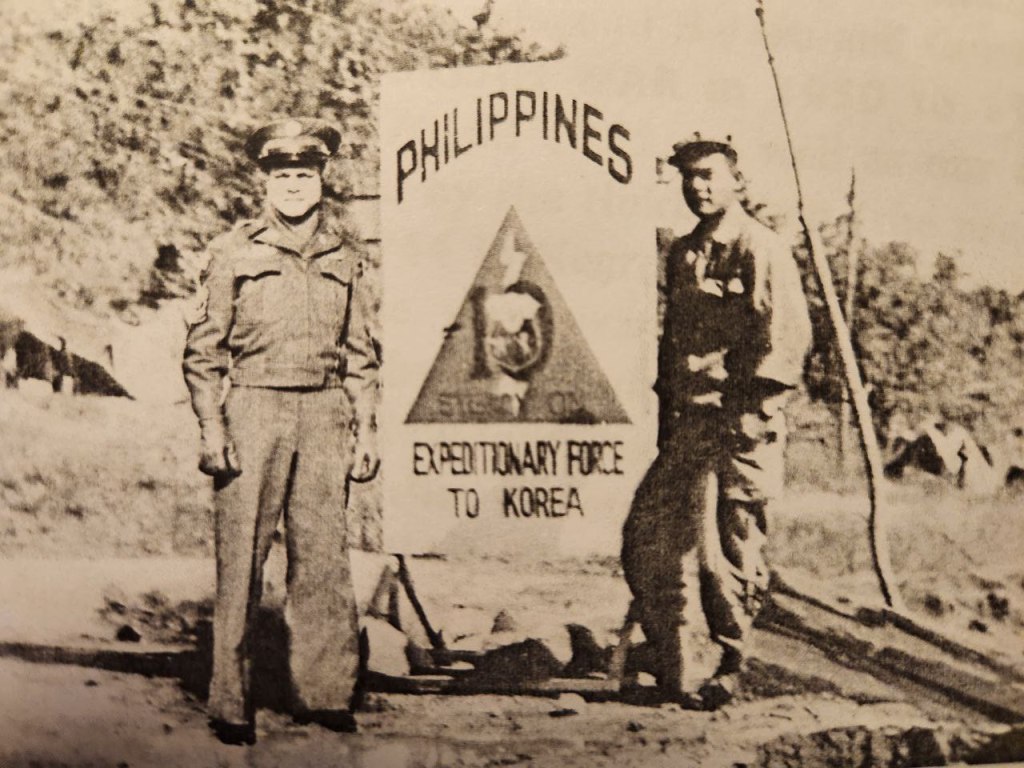
Photo courtesy of Major Maximo P. Young
We don’t have long memories, we’ve proven that. We don’t like thinking about painful stories from our past, which is hard because our past is riddled with painful stories. But there are good stories, too, and we are missing out on those because entrenched authorities don’t want to have debates. Part of rectifying that situation is examining our heroes and having the tough conversations about who should be celebrated and who shouldn’t be.
Maybe if we elevate more Filipino stories, Jose Rizal can fade a little bit into the background and finally be imperfect.
The Curse Of the Only One
One of the reasons Jose Rizal has become almost a venerated figure in Philippine history is that he is considered by many to be the National Hero.

When we give someone such venerated status, any crack in the veneer of perfection suddenly becomes too much to bear. Jose Rizal suddenly has to be more than a polyglot, a doctor, a naturalist, a revolutionary, and a writer. He has to be more than just a man who stood against an empire, he has to be the man who did it all.
Suddenly, his values have to align with the country’s values. And because he is the only one, we see a hero as someone who has the smarts and money to be educated abroad and learn 22 languages.
Having more heroes in the conversation means Jose Rizal can at least be a man among many other people who contributed to the Philippine story. A very brave and important guy, but still just a guy, not some sort of super Filipino.
We Could Have So Many Heroes
Approving heroes brings faces to the stories of our history, and compiling a new list of names could go a long way to illustrating that to our people. When we are taught history, we tend to hear that it started with the Spanish and ended with the Spanish, and that is simply not the case. Filipinos were part of the globalized world before white people arrived and we have been an integral part of world history after they left.
Why can’t that list of heroes be 20 people long and have as many women as there are men on it? What’s stopping us from proclaiming a hundred heroes? If people meet the criteria, why not?
If we do bring on the deluge of heroic stories, maybe we can start creating some historical memory.
In 2022, the Bangko Sentral took Josefa Llanes Escoda, Jose Abad Santos, and Vicente Lim off the 1000-peso bill in favor of a Philippine eagle. Yes, the eagle is majestic, but three heroes of WWII were sacrificed in the process. There was outcry about the removal of those figures, but not enough to keep them. We don’t remember those three names. They were never given official hero status, so we didn’t consider their stories to be important.
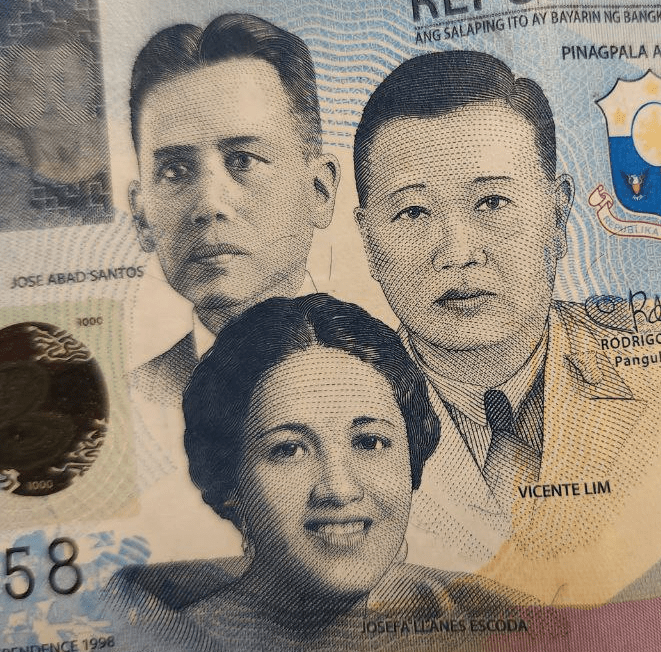

Before and after: three heroes lost their place on our money. Source: Bangko Sentral ng Pilipinas
The best thing about having a list is that we can update it. We can incorporate new information into our story and treat our heroes like complicated and flawed human beings who were ultimately great, despite those flaws. (Not you, Juan Luna.)
Even if we don’t proclaim official national heroes, we need to propose a new “unofficial” list. One that reflects the heroes of this century and reminds us that Philippine history didn’t end on June 12, 1898. If we begin to remember what happened to us, we can start to build on that foundation of identity and forge ahead with a little more awareness of who we are. Showing stories of who we could be would be a great start.
 Journalixm