

Approx. reading time:
“CARPS to understand how Gen Zs speak?”
First of all, I apologize on behalf of all Gen Zs. As a writer myself, the sentence above doesn’t make sense, grammatically speaking. I want to clear off the misunderstanding by saying that
NO ONE ACTUALLY USES CARPS, PICS, SHARKS, and the like in an actual conversation because it’s dumb and it doesn’t sound smooth enough.
(Author’s Note: It’s conyo slang meant to be funny, popularized by Lasallian vloggers online. It’s funny, but trust me no one uses these unironically in a conversation. Also, I’m here to educate y’all about Gen Z Speak!)
Plus, I get it! The formula for the slang mentioned goes like this:
CARPS = CARPS stands for carpet. And a carpet is a rug. And rug is spelled as “R U G”. If you read it closely, it sounds like “Are you g?”. So overall, it means that you’re asking someone if they are willing to accept your invitation.
Some of us may sound cringe (most are proud of it), but once you get to know us, you’ll understand why we speak the way we do.
I’m not gonna elaborate on the other ones because it’s going to eat chunks of this article. Personal sentiments aside, the example mentioned above reveals a bit of a structure as to how Gen Zs, such as myself, can come up with our own vocabulary inspired by our own internet exploits across Twitter, Reddit, TikTok, and similar social networking sites.
Let’s take you on a brief crash course on why language is arbitrary and why we speak the way we do these days.
TADBALIK: The Art of Speaking In Reverse.
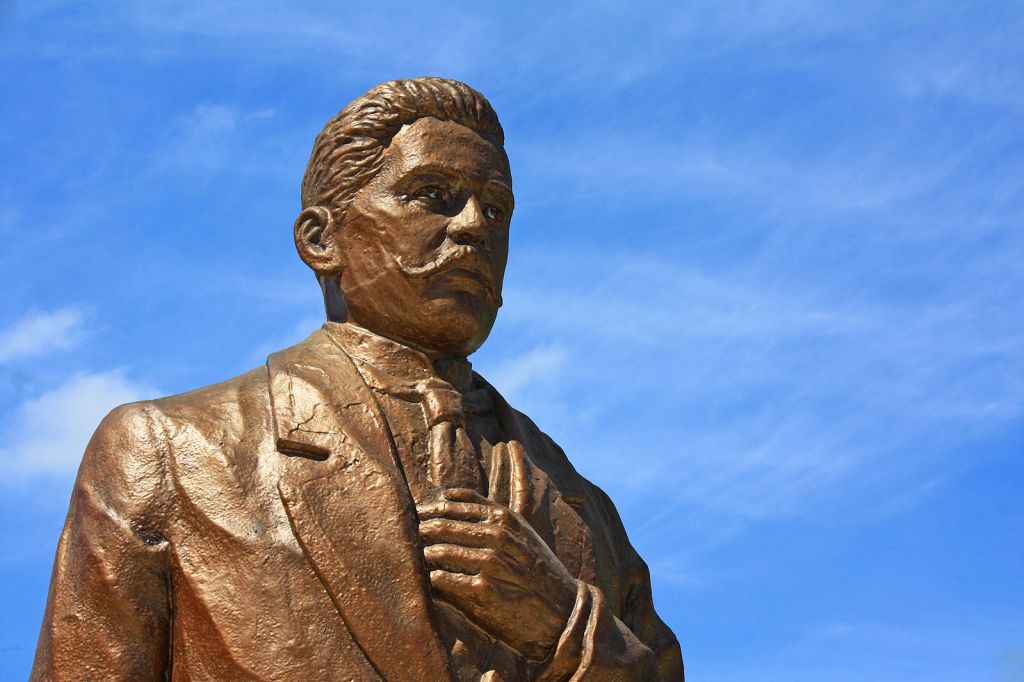
Lodi, Werpa, Tebulats, this method of reversing words is what experts call “Tadbalik”. Linguistics Professor from UP Diliman, Jay-ar Igno, stated in his CNN Interview that the “Tadbalik” method was a result of the Filipino’s creativity in adapting the language to the current times. It was also a result of Filipino playfulness in using words. Roy Cagalingan of the Komisyon sa Wikang Filipino also mentioned in the same interview that these trait have existed as early as the Spanish revolution, when some Filipino revolutionaries tried to conceal their identities using anagrams, like Marcelo H. Del Pilar who used an anagram for his famous pen name (Plaridel) as one of the editors of La Solidaridad. There’s a werpa move right there!
Nowadays, we’ve continued to adapt words such as yosi (sigarilyo or cigarette, with the first and last syllable combined together in reverse), erps (pare or pre, derived from kumpare which means “friend”), dehins (hinde), amats (tama), and many more. And these words became popular during the 70s when tadbalik started to get popular. So that’s like half a century’s worth of language that we still enjoy using to this day. Thank you, older folks, for the inspiration!
Over the course of history, the tadbalik method has continued to majorly influence Pinoy slang—even up to recent times as how most Gen Zs would use it on a daily basis (Gen Zs love reversing their words because it’s hip and it’s funny) like “aports”, “eguls”, “enka”, “lodi”, “omsim”, “eabab”, “ekalal” and so much more. Starting off as a means to protect one’s identity for security, our slang has continued to adapt to modern culture.
ANO ANG CHIKA?
The language we’re using has also been touched by gayspeak. That being said, the dominating vernacular is majorly influenced by the LGBTQIA+ community way back in the 70s.
Fun fact: The term jowa was actually coined from asawa, which through gay speak transformed into josawa until someone decided to remove the middle syllable to make it much easier to pronounce.
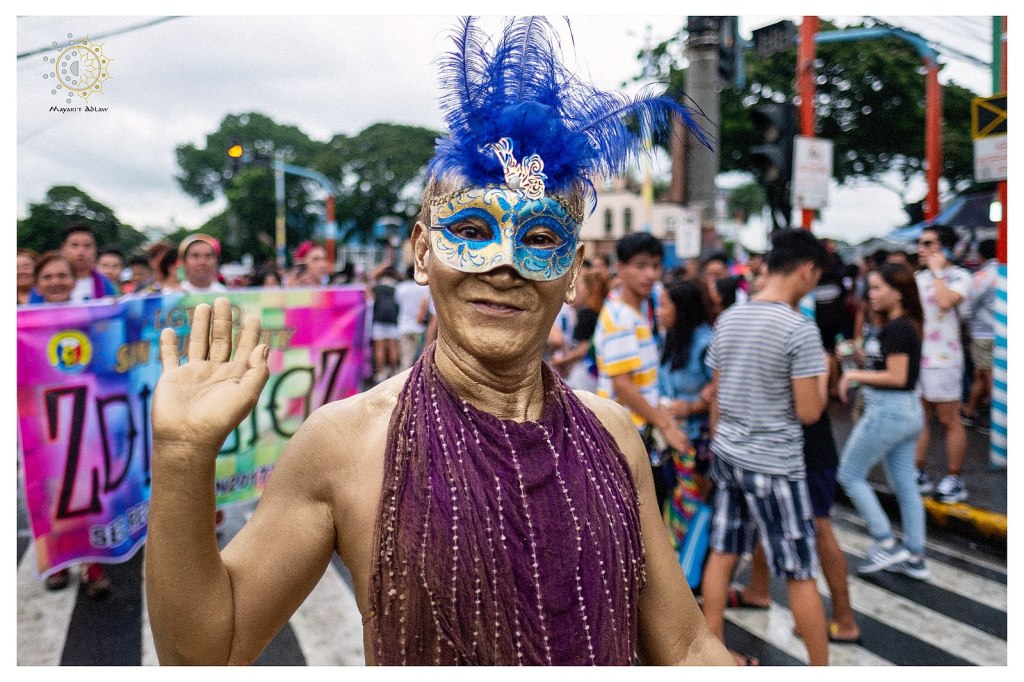
On Reinerio Alba’s notes on his essay about Filipino Gayspeak for NCCA, he then quotes Ronald Baytan in his essay called “Language, Sex, and Insults: Notes on Garcia and Remoto’s The Gay Dict” coins the term “transgressive reinscription”, a method in which the gay community further developed the discriminatory and oppressive language targeted towards them to a much more palatable language that is more neutralized and less demeaning. (i.e. “bakla” was then transformed into different variations of its synonyms → baklita, baklush, bading, badette, badush, beki, okoma, tuyat, badaf, ngedabi, jokla, beklabuh, as cited from the Glosaryo Gay Lingo).
Language then was further developed to neutralize oppression and resist prejudice while also shining a spotlight on the Filipino’s creativity. But that’s not all there is to it.
Mu5zt4H k4?
Math got your tongue? The Jejemon (or the j3j3m0n) wave hit and created a massive cultural phenomenon in the early 2000s. The phenomenon was coined as Jejemon, loosely adapted as to how “jejemons” laugh in text (j3j3j3 to be exact).
It’s partially the popular Nokia mobile phones and their 160-character limit that’s at fault here; a lot of Filipinos had to devise ways to deliver their message in under 160 characters. But given that limit and the keypad configuration of early Nokia mobile phones, it’s much easier to substitute letters for numbers if you’re really not feeling up to it.

Ironically, no character limit is stopping the jejemon from lengthening their messages. A mere “Hello Po” magically transforms into “30w ph0eszx5” and “Musta” to “Mu5sxt4H”. It’s indicative of our very own creativity in saying things bordering the absurd and atypical.
Jejemon, according to Vladimeir Gonzales on his 2012 Feature Article from the now-defunct Philippine Online Chronicles, states that Jejemon is a combination of Jeje, an alternate pronunciation to Hehe, combined with Mon, which definitely comes from the word Pokemon—alluding to the fact that Jejemons are as incomprehensible as your local Pikachu and Bulbasaur.
But as incomprehensible as they can be, there is a particular charm to them (as a Gen Z myself). Like how a Pokemon may sound cute depending on its cries, Jejemon also adds a layer of endearment to our usual greetings. As hello transforms into 30w (pronounced as ee-yow), its auditory tonality shifts to a softer, even cuter version of itself. Maybe there was a demand to veer away from the crude language of intellectualism and grammar nazis and instead shift to ones that allow us to connect more interpersonally with one another. Ask me about it but Jejemon has its charms, and it sure did resonate with a lot of people during the height of its popularity.
We can’t deny that amidst its cult status, Jejemon is just one of the statements that the Filipino Language has allowed us to explore language in ways that will connect us more to each other—albeit with a very divisive crowd following on the onslaught of the Jejebusters, but that’s another story to tell.
Diagnosed: Chronically Online; Reasons: Kakakompyuter Mo ‘Yan!
Everything mentioned above, as far as everyone is concerned, is now accessible to everyone in just a few clicks, especially to us Gen Zs. Language has transformed into this monolithic virus, continuing to rewire our way of interpreting things.
We’ve experienced our “formative years” on lockdown and that has shifted our ways of living and interacting with one another.
Online rumors and jokes suddenly transform into harmless banter. We don’t even speak in full sentences anymore, just movie references. We speak in code. We speak in Tiktok trends, our tongues enjoying the supple honey and milk that pours from the rivers of popular culture.
So here’s some fun Gen Z slang that we use on a daily basis (no jokes this time):
- Omsim = Mismo. To affirm one’s statement. Other variations (Oms, Oum)
- TBH = To Be Honest. Sometimes pronounced as Tee-Bee-Eych.
- AFAIK = As Far As I Know. Sometimes pronounced as A-Fayk.
- Awit = Comes from Aw, Sakit! Spelled Aw8 at times.
- Alaws = Comes from Wala. Means “nothing”.
- FR = For Real. When you want to emphasize that what you’re saying is real.
- Legit = Same as FR. Used together with FR at times. Also spelled as Leg8.
- Etivac, Kankaloo, Kyusi, and the likes = Derivation from the actual city names based on its locals.
- I C I C = I see, I see. A subtle approval or acceptance towards something.
- Rizz = Comes from Charisma. You use this when a guy/girl can grab the attention of the opposite/same sex.
- Forda Fersons = Means “For The” and “Persons”. Used separately in this syntax “Forda + Noun + Fersons”. Came from TikTok user Chrishanna Luisa Olavidez Austria who originated the meme when she posted a video of herself after drinking.
- SKL = Share Ko Lang. When sharing something just because.
- OOMF = One Of My Followers. Typically used on Twitter when you’re subtweeting (which means backstabbing) a follower anonymously.
- Drip = Refers to one’s outfit. It can be used thematically based on a character of reference’s usual ensemble. (e.g., “Benjo is wearing the Kuya Kim Drip”)
- Shawty/Shoti = Pertains to a pretty hot girl. (e.g., “Pare sa BGC maraming shawties”)
And there’s more where that came from. We still haven’t added emoji in there. Overall, It’s a weird mix, but that’s just how we like it. The language we use is a celebration of the language our predecessors have used and enjoyed—and most of the time we just want to be not judged for it.
For us, our slang is fun, hip, trendy, and most importantly, it’s definitive of how we embrace and adapt to the ever-changing culture we share. We’ve experienced our “formative years” on lockdown and that has shifted our ways of living and interacting with one another.

If we hear another Millennial or Gen X tell us “kakakompyuter mo ‘yan”, then that’s fine. We’re even proud of it because most of our life now is online. We make friends online. It’s quite interesting to see some adults would claim the legitimacy of online relationships. For us Gen Zs, as the internet transforms into this extended version of ourselves, the relationships we’ve made online are as close to what most of us can consider as real—much like the rest of our lives. And that’s just how it works for your typical Gen Z: you doomscroll, do some work, and call it a day. Sometimes you jump in on Discord and play online games with your online buddies. Or go date people online. We still read books as well, not just fanfictions and online threads, in case you ask.
To be honest with you, our generation is no different from yours when it comes to adapting. Life changes so abruptly these days, and trends come and go in a blink of an eye; the same can be said with our language and we do our best to get by with the present times (as fast as it may actually go—even we find it hard to keep up sometimes). That’s how we find our tribe in these fast-paced times. Some of us may sound cringe (most are proud of it), but once you get to know us, you’ll understand why we speak the way we do. Be present with us, and we’ll be glad to have you onboard.
But seriously, don’t h8 us for how we speak. SKL.
Headline image by Evita Sindayen.
 Journalixm