

Approx. reading time:
Fandom conventions in the Philippines have come under fire as of late for a number of reasons, from CONQuest’s miserable crowd management policies leading to hours-long lines, to Komiket unintentionally shutting out LGBTQIA+ creators from Komiket Pride in favor of cishetero ones (and the resulting PR fumbles). And with con-goers being more outspoken about their experiences, there’s a lot of negative conversation about cons these days.
Still, people keep coming back. As egregious as the errors at CONQuest were, a number of commenters expressed a willingness to go to the convention’s next iteration after organizer Justin Banusing posted a public apology on Facebook.
Two things are clear: People still want to go to cons, but they also want them to be better. The question is, “How?”
Journalixm spoke with several individuals involved with cons on different levels to get their insights. By listening to what they have to say, maybe we can find the secret recipe for a con that starts social media conversations for all the right reasons.
Kraken Mae, Seasoned Con-Goer

Kraken Mae has attended seven major cons, both as a regular attendee and as a member of the press. She’s also hosted several, including ESGS, Warner TV Pop Expo, and BatCon. From her experience, there are several non-negotiables that organizers need to prioritize:
- Ample space to move around in
- Holding/rest areas for cosplayers and media
- Dedicated photo booth areas
- Accessible food and drink
- High-quality sound systems
What she emphasizes most, however, is the need for proper regulations that protect people from folks that might get a little too close for comfort. Harassment at fandom conventions has been so rampant for so long that the Cosplay is Not Consent movement continues to be as necessary today as it was when it began in 2014.
“I am passionate about promoting proper etiquette at public conventions,” Kraken says. ”It’s important to create a safe space for cosplayers and keep an eye out for predators who might get too handsy.”
“My friends and I have encountered creepers at conventions, and apparently it’s still going on to this day,” she adds.
All these points are to create comfortable con experiences, which Kraken feels should be top-of-mind for the people behind them: “While organizers need to ensure good business revenue to keep the convention running, plus take care of the VIP guests, they need to also be mindful of the attendees who will be spreading feedback about it and downloading it into their core memories. Some saved up money and really took the time to go all the way to attend, so it’s important that it’s well worth the ticket price.”
Popuhatto, Exhibitor
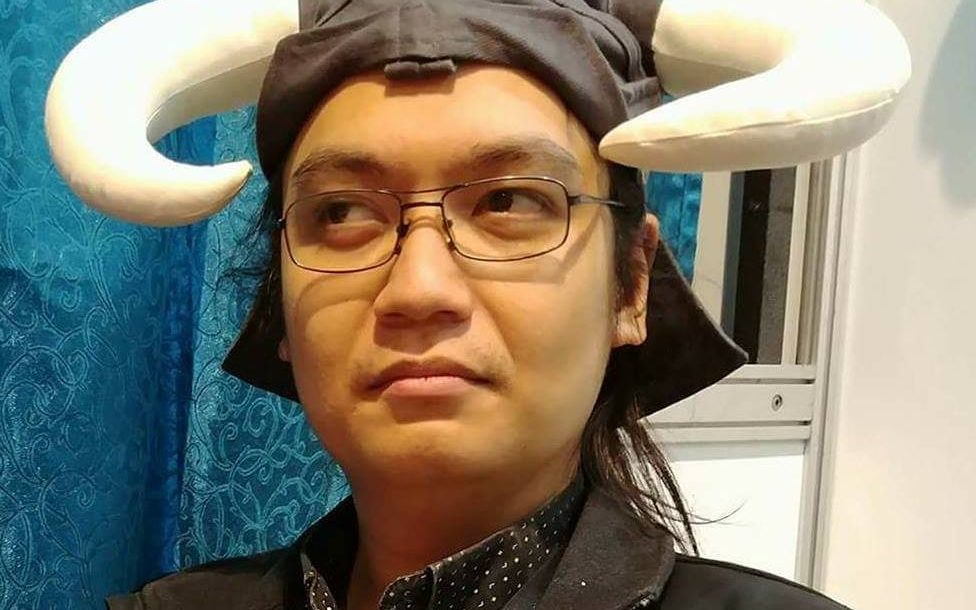
Selling your wares at a convention is no walk in the park—in every sense of the phrase. According to artist Popuhatto, one common pain point for exhibitors at these events is that they barely have room to move around. Booths are often cramped, as majority of the floor space is allocated for the attendees’ foot traffic.
Popuhatto, Maku Felix, Bbunbuns, and Kofidoki are an artist group that call themselves The V2s. Over the past few years, they’ve been selling their art at major conventions, including ESGS, StickerCon, Komiket, and APCC. And contrary to what one might assume, they’re not in it for the money.
“Why do we join cons? Besides being fun, it’s a great way to catch up with friends, network, and be in touch with what’s current with the culture,” Popuhatto shares.
“The cash is a bonus,” he adds.
Popuhatto says it costs his group anywhere from PHP5,000 to PHP17,000 to participate in a convention, as exhibitors shell out for space rentals, printing costs, transportation, and often their own food and drink. Without any guarantee of an ROI, it becomes the organizer’s responsibility to make sure the experience is worth the exhibitors’ investment.
Because, as Popuhatto puts it, “Grumpy exhibitors turn away good customers.”
Popuhatto says that organizers could also give exhibitors a little more lead time prior to the event. Some exhibitors apply to be part of conventions months ahead of time, only to be informed of their acceptance as little as a week before the event. From there, it’s a frantic scramble to produce merchandise and market themselves at the same time.
Some consideration could also be extended towards their ability to participate in organizer-led initiatives like townhall meetings, which are often held in person.
“Exhibitor meetings can be done permanently online,” Popuhatto says. “From observation, a lot of exhibitors come from outside the metro proper: Cavite, Rizal and Bulacan.”
Dante Gagelonia, Side-Event Supplier

According to GeekFight producer Dante Gagelonia, a convention’s suppliers are often the public’s main point of engagement with the event. Aside from hosting trivia game nights at partner establishments, GeekFight also supplies fandom conventions with custom side-events, most recently at UnboxCon and Manila Game Fest.
“Side-event teams become extensions of the events they participate in,” he says. “If an event looks out for their welfare, they will also look after the event’s welfare.”
Based on GeekFight’s experience with six different conventions, Dante feels that organizers need to prioritize improving their communication channels with suppliers.
“Too often over the years, GeekFight would be caught flat-footed by venues and organizers that would abruptly spring some new requirement or concern on us simply because they forgot to talk to us earlier,” he shares. “There’s only so much time and room for a supplier to adapt at the last minute, so talk frequently with them in the weeks leading up to your event, even if it’s just to affirm that all is well.”
“Talk to [suppliers] constantly, because they are often your most front-facing people interacting with the public, and they can help you address things that your own floor staff may not even be aware of,” Dante adds.
By keeping these lines of communication both open and active, organizers also get better at treating their suppliers like people, not faceless services. Con organizers need to ensure that suppliers have access to food, drink, restrooms, and electricity; that their movement isn’t impeded, especially during emergencies; and that their assigned point people are always available.
It all comes down to one test, says Dante:
“As an organizer, put yourself in a supplier’s shoes and consider: would I honestly be okay with this, if I were the one working with this arrangement?”
A Hero’s Call, Small-Scale Con Organizer

In 2018 and 2019, advocacy group A Hero’s Call held CauseCon, a small fandom convention that raised funds for different charities. The event was inspired by US-based cosplayer Michael Mulligan, who happily shared his concept of a not-for-profit con with A Hero’s Call.
The group, headed by Elliot Miranda, Maronne Cruz, Mika Fabella, and Mikhail Bernardo, shared their thoughts on how being advocacy-centered naturally led to CauseCon being people-first.
“As the name might suggest, our top priority for Causecon was to give back to a cause we believed in,” A Hero’s Call says. “Which leads [us] to our second priority: providing a safe and positive space for fellow geeks! We wanted a place where people–hopefully with our same shared values of being like our favorite heroes and trying to be a little bit kinder–could hang out, make new friends, eat great snacks, sing a little or a lot, and leave with some really good post-con high.”
“Our third priority was to logistically ensure a comfortable experience for everyone from our merchants to our marshals to our attendees.“
Given that NOVA Gallery–the venue for CauseCon–had a maximum capacity of 200 people, the organizers devised a color-coded stamp system that would allow guests to rotate in and out of the space as needed. If ever NOVA threatened reaching full capacity, the hosts would ask all guests of a certain stamp color to move to the supplementary space outside, which had tents and fans to ensure that attendees stayed comfortable.
“We also made sure to delegate roles and brief our volunteers as specifically as possible, and during the event itself we were constantly buzzing around ourselves, making sure we were there in case the volunteers had any questions,” A Hero’s Call shares.
The organizers also made sure that every exhibitor was given enough seats and homemade sandwiches for their meals, going so far as to keep specific dietary requirements in consideration.
These measures were made possible thanks to the donations made by individuals who believed in the organizers’ cause, and could be a blueprint for other cons. Organizers could, for example, offer sponsorship packages that directly fund exhibitor meals, tents, and other items that show care for all the people involved.
“Honestly, we kind of just tried to treat everyone like they were guests entering our home— we entertained individual concerns and made sure needs were met,” A Hero’s Call says.
Adrian Arcega, Large-Scale Con Organizer

While the likes of CONQuest will no doubt learn from their failings, newer events like the upcoming NerdFest are being created with the intention of improving upon the current formula.
Scheduled for May 2024 in Alabang, NerdFest is envisioned as both a celebration of what excites us in pop culture, as well as a means for audiences to engage with their favorite talents and creators. It’s also a direct response to what organizer Adrian Arcega learned from his time heading NexCon.
“There is a segment of the con-going market that wants more meat out of their convention experiences,” Adrian says. “They can’t just go there, sashay and cosplay away, spend money, and then leave realizing they just tired themselves out. The event has to be meaningful to the attendees.”
Adrian also believes that cons need to adapt to how the pandemic has changed both the market and the venues themselves. Attendees want to be able to stay in one spot and hang out with their friends, but ongoing best practices for preventing the spread of COVID-19 require venues to enforce constant movement.
It’s all about being able to find balance between what the market wants, what your venue and other partners require, and what’s realistic.
“Balance just comes from smart planning, and putting yourselves in the shoes of the attendees, really. Empathy,” Adrian says.
“If they [organizers] just focus on numbers, or just being ‘the biggest event in all of Asia’ without being smart about the planning, that just smacks of greed. Or hubris.”
“Focus on the experience. Make the content meaningful; not necessarily in a trade convention-serious kind of way, but you have to make sure that people will get something out of your content, even way after they leave the con.”
The one theme consistent between Kraken’s, Popuhatto’s, Dante’s, A Hero’s Call’s, and Adrian’s answers is that conventions need to prioritize the people around them. Given that cons are a reason for people of shared interests to congregate, organizers need to treat them as human beings, not faceless fans who exist to pump up vanity metrics.
It’s all about sei-katsu-sha, the Japanese philosophy of seeing each person as a whole human rather than a consumer. While conventions are business ventures for the most part, it’s easy for organizers to forget that their business is driven by people’s experiences. If people don’t walk away happy, the business suffers. Negative word of mouth spreads fast and kills ticket sales even faster.
On the other hand, positive word of mouth–the kind that has people typing up gibberish in all caps because words fail to capture the primal joy a good con elicits in them–builds the one thing that guarantees sales, no matter what situation the market is in: Trust.
Build a fandom convention that people can trust will treat them like human beings, and you’ve got a loyal congregation ready to go wherever you choose to celebrate them.
Build a con that prioritizes people, and it’ll have its own fandom around it.
With input from Paolo Jose Cruz.
 Journalixm