

Approx. reading time:
Disney CEO Bob Iger recently admitted that streaming efforts have diluted the quality of the Marvel Cinematic Universe (MCU)—a rare admission of fault for figureheads of monolithic mega-corporations. He said that the MCU is due for a recalibration, which will result in fewer projects going forward. He’s also dead wrong about the MCU’s recent impact on audiences, and I have the numbers to prove it.
In fact, data seems to suggest that the MCU is doing better than ever, and that superhero fatigue is a myth.
But before we dive deep into several layers of nerdery, a note on methodology: the figures you’ll be seeing are based on two metrics: aggregated review scores on Rotten Tomatoes and worldwide box office (WWBO) take. I’m using the average between the Tomatometer (critic reviews) and Audience Scores (user reviews) to determine whether or not the MCU’s seen a dip in perceived quality, and the WWBO numbers to see if there’s been a corresponding decline in viewership. It’s not a perfect model by any standard, but it’s a lot more rigorous than just going by social listening.
Note that I use “perceived quality” for the Rotten Tomatoes scores, since these numbers are just based on whether or not a reviewer liked the film more than they disliked it; Rotten Tomatoes scores not a measure of actual quality. They tell us more about a movie’s range of appeal rather than quality per se, so keep that in mind as you keep reading.

I’ve also chosen to give the Tomatometer and Audience Scores equal weight, even though the number of unique reviews submitted by users outnumber those of the critics by several orders of magnitude. User-submitted reviews are wobbly, at best—people are more likely to leave reviews when they’re angry about something. Angry people are also more likely to program bots that review-bomb films that hurt their fragile egos.
Case in point: the two MCU properties with the biggest discrepancies between Tomatometer and Audience Scores, Captain Marvel and She-Hulk: Attorney at Law, have twice the number of user reviews than their most popular counterparts. Captain Marvel was reviewed by 100,000+ users to Avengers: Endgame’s 50,000+, while She-Hulk was reviewed by 10,000+ to What If…?’s 5,000+.
This is especially surprising when you learn that Captain Marvel is the MCU’s 10th highest-grossing movie of all time; a movie that was supposedly “hated” that much shouldn’t have been able to make USD1.13 billion worldwide. It just doesn’t make sense, unless you factor in the explicit feminism in both Captain Marvel and She-Hulk…
…But that’s an article for another time. We’re here to prove Bob Iger wrong and disprove superhero fatigue, dammit!
Let’s begin by countering the claim that Disney+ is to blame. If you compute the average of all Tomatometer and Audience Scores for MCU properties between 2021 (when the Disney+ phase began) to today, you get a very respectable 83.26. For perspective, Nolan’s Interstellar scores a 79.5, which means that on average, more people will like the MCU films of this era than Interstellar.

The Disney+ era score isn’t too far off from what many consider to be the MCU’s peak: Phase 3. The stretch of 11 films from Captain America: Civil War to Avengers: Endgame scores 86.23 (Iñarritu’s Academy Award-winning Birdman comes in at 84.5).

Removing all theatrical releases since 2021 bumps the MCU’s score up to 85.45, making the Disney+ releases quite comparable to Phase 3. If you were to cut out She-Hulk for the questionable nature of its Audience Score, you get 88.89—a score any franchise would be overjoyed to have.
Not that the films in this era are slouches of any sort, mind you. Even when you include Eternals and Quantumania—two of the lowest-scoring films in the MCU’s 15-year history—you get an average score of 80.83, which again makes them just as liked as Interstellar, more or less.
Most of the heavy lifting is done by Spider-Man: No Way Home and Shang-Chi, which just so happen to be the two highest-scoring films in the entire MCU. No Way Home comes as no surprise with a score of 95.5, but Shang-Chi—a 95!—is a revelation.
In fact, the three strongest films of the Disney+ era—No Way Home, Shang-Chi, and Black Panther: Wakanda Forever—outscore Phase 3’s top triumvirate of Endgame, Spider-Man: Far from Home, and Thor: Ragnarok, 93 to 91.5. Even the top three TV shows have Phase 3 beat, with What If…?, Loki, and Hawkeye edging out the three movies with a score of 91.67. Why, then, is Iger hitting the panic button on the MCU?

It has everything to do with that little factoid about negative reviews earlier. Just as people are more likely to write reviews when they’ve had a bad experience, they’re also more likely to remember films and shows that don’t meet their expectations. The MCU hasn’t gotten worse; it’s just producing way more content now, which increases the number of below-average projects coming out.
The Disney+ era has only had three projects that scored lower than 70, out of a whopping 19 total. Among those 19, 13 have scores higher than 85—and five of those score 90 or higher. But because of the human tendency to dwell on the negative, those three “bad” projects have become representative of this stage of the MCU.
So why did Iger say that the MCU is seeing a dip in audience interest, when both critics and audiences seem to agree that this isn’t the case? It all boils down to our second metric: how much these projects actually earned. Regrettably, we can’t factor in the impact of the Disney+ shows and specials; streaming companies are notoriously secretive when it comes to their metrics. But a look at the WWBO take for the theatrical releases gives us some pretty interesting information.
If you take a look at the 15 highest-grossing films in MCU history, you’ll see that a vast majority of them belong to Phase 3. Thanks in large part to the pop culture behemoth that was Avengers: Infinity War and Endgame, Phase 3 accounts for nearly 61% percent of the top 15’s combined USD19.91 billion gross. The Disney+ Era comes in at a distant second with just 18.6%—which, I should highlight, is still USD3.7 billion.

However, some may argue that Infinity War and Endgame had the unfair advantage of being the culmination of more than a decade of storytelling. There was no chance audiences would miss them, as they might have with some of the other movies. So what happens when we look at the WWBO takes of the top three films from each of Phase 3 and the Disney+ era, without these two?
As it turns out, No Way Home, Doctor Strange: Multiverse of Madness, and Wakanda Forever earned more than Phase 3’s top three, sans Infinity War and Endgame. Phase 3’s Black Panther, Captain America: Civil War, and Spider-Man: Far from Home combined to earn USD3.58 billion worldwide, versus the Disney+ era’s USD3.7 billion.
On the flipside, however, Shang-Chi is the MCU’s 5th-poorest performing film thus far, despite being its second most-liked. It earned a total of USD432 million worldwide, making it one of only seven MCU films that failed to break the half-billion mark. And of those seven, four belong to the Disney+ era.
I think this is what actually forms the crux of Iger’s statement. It’s not that the MCU is putting out lower-quality films and shows; it’s that the MCU is earning less than what Disney is used to. It’s possible that Iger, like many individuals of a certain income level, is conflating revenue with quality. It’s not a good movie to them if it doesn’t earn them the equivalent of a small country’s GDP, even if critics and audiences say otherwise.
There are a lot of other reasons why the WWBO takes of the newer MCU films aren’t as uniformly great as they used to be in Phase 3, chief of which is the pandemic we’re all still living in. Lockdowns and restrictions made us grow accustomed to waiting for films to drop on streaming platforms, saving us the ever-ballooning costs of movie tickets. Money is harder to come by, with jobs slowly dwindling as employers look for more ways to “streamline” their workforces.
It’s also just plain better to watch movies at home sometimes; you can at least be guaranteed that there won’t be any strangers ruining the movie for you by forgetting that indoor voices are a thing.

The quality is still there, and the audiences are still there—people like Iger just aren’t seeing the money. They’re looking to blame everyone but themselves; audiences are just figuring out ways to stay afloat in trying times, while still getting what they want.
Which brings us to the final point I want to make: that there is no such thing as superhero fatigue. People still want superhero stories; it’s evident in how we’re still seeing billions of dollars being made in ticket sales for superhero flicks, and in how every major streaming platform still carries superhero shows. We still want to see stories of people with extraordinary abilities championing our values.
What actually exhausts us is oversaturation, not superheroes per se. What tires us out is the effort it now takes to enjoy the things we love.
To put it another way, let’s pretend that your favorite food of all time is Chickenjoy. What do you think will happen if, after seeing the mountains of Chickenjoy you’ve bought over the years, Jollibee decided to revamp its menu with 20 variants of Chickenjoy?

It starts to feel a little overwhelming. You, being the Chickenjoy connoisseur that you are, might want to try all 20—there’s some pride to be had in being a Chickenjoy completionist, after all. But that would require you to spend 20 times the amount you normally would, and you can only eat so much chicken every day. And what if, by the time you’re done trying them all, Jollibee busts out another 20 new variants? What then?
You’ll likely taper down on the Chickenjoy. You’ll pick a handful of your favorites and stick with those. You’ll give your wallet a break and cut down to having Chickenjoy maybe once or twice a week. You still absolutely love the stuff, but there are real limits to what you can do to enjoy it.
When the MCU exploded in scope via Disney+, that’s exactly what happened. The films and shows they put out are still, for the most part, well-liked; the data tells us so. But audiences have become more selective in the effort they’ll put into enjoying these films. They’ll wait for films to hit Disney+ instead. They’ll skip a few titles. They’ll wait for content to pile up, subscribe to Disney+, binge everything in a month, and then unsubscribe.
They’ll also remember the stuff they tried, but didn’t like—like, say, Ampalaya Chickenjoy—and have those memories overshadow the good ones.
We aren’t fatigued by superheroes; there’s no way we could be. They’re the modern expression of our primal need for mythology. We’ve had superheroes since before the Ancient Greeks gave us Heracles; before Lam-Ang was passed on through oral tradition. Enjoying stories of human beings with supernatural abilities is core to the human experience.

It’s the studios’ profit-driven machinery that tires us out. It’s the constant calling for our attention, the never-ending demand to profit off of our happiness, the relentless efforts of mega-corporations like Disney to milk us out of our time and money in an ever-growing number of ways that exhausts us.
What fatigues us is how the pursuit of profit has turned loving superheroes into a chore.
At around the same time that Bob Iger made his statement about the MCU, Shang-Chi star Simu Liu shared how the film’s sequel was floating in development limbo. The sequel to one of the MCU’s most-liked films on Rotten Tomatoes was struggling to surface. It doesn’t make sense; at least, not until you see its box office take.
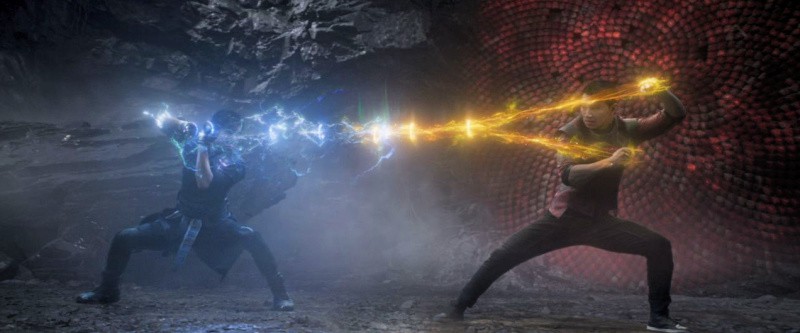
Iger was wrong about their Disney+ efforts diluting the audience’s interest in the MCU. What’s being diluted is their profit margin, because they never accounted for their audiences being human. They didn’t stop to consider that we have limits to what we can do for the things we’ll never stop loving.
If Disney’s bottom line wasn’t being impacted, Iger would never have made the statement in the first place. Does anyone really think that the same guy, who called striking writers’ and actors’ demands for fair pay and the ethical use of their talents “unrealistic”, would suddenly care about their overworked VFX artists, as he asserted? That’s a tougher fairytale to sell than superheroes.
So maybe Disney is right to slow down on the MCU. Maybe it’ll help them bring things up to their standards again. It just doesn’t address the root of the problem.
As long as their greed takes precedent over acknowledging audiences as whole human beings rather than mindless consumers, this is just going to keep happening.
 Journalixm