

Approx. reading time:
Online film critic Goldwin Reviews has become an enemy of the Filipino film industry almost overnight. At least, that’s what one side of the discourse around their coverage of the recently-concluded 2023 Cinemalaya Film Festival appears to suggest. The bigger issue surrounding all this, however, is that something is inherently broken with how we as Filipinos approach critique itself, and what that entails when it comes to how we shape ourselves.
Here’s the drama, in a nutshell: Goldwin Reviews gave some Cinemalaya films scathing reviews, and then ranked each one according to their scores, as was their right. They wrote some fairly mean lines in their reviews, as was also their right.
It’s the meanness (and to a smaller degree, the rankings) that people invested in the local film industry have taken issue with. It’s been argued that most of these films were made on shoestring budgets, and deserve to be graded according to that curve without vitriol. Some say that first-time filmmakers, like some of those featuring in the festival, might find the harshness discouraging, and opt to end what might’ve been promising careers.
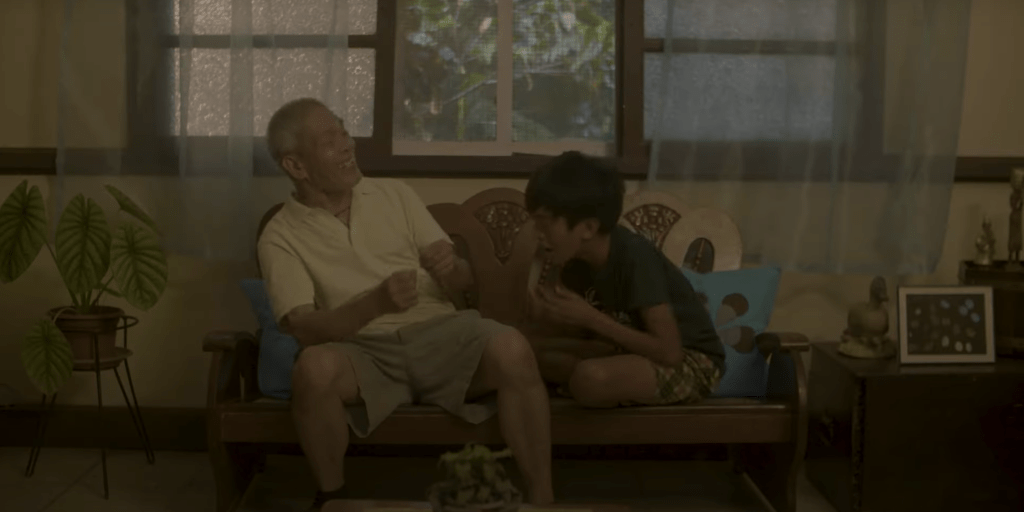
Image via Cinemalaya on Youtube.
These are all valid arguments, but I don’t think Goldwin Reviews is entirely in the wrong here. Instead, I believe that they’re a product of the many, many issues in local criticism culture. If you find their type of critique monstrous, know that they’re a monster made by the system rather than inherent nastiness.
A lifetime (read: pandemic) ago, I was a professional film and theater critic myself, having been given the privilege of writing for two major platforms. While COVID lockdowns made sure that didn’t last too long, my two-ish years in the circuit was enough to provide a bit of valuable insight. Here’s what I learned:
People don’t always understand how to write critique.
…On a professional level, at least. There’s a huge difference between personal and professional critique. The latter is based on how the material impacts the critic as an individual, and therefore can never be wrong—who are we to dictate how people should feel? Thought-policing is a rather dangerous thing.
Professional critique, on the other hand, is a discipline. It requires the critic to stand outside of one’s self and consider the full context of the work, as well as of the world in which the work was made. It’s not enough to take a film at face value. Critics need to understand the details in how it was crafted; what significance it has to the audience’s current milieu; and any histories, both personal and social, that contributed to why this particular film was made the way it was, when it was made.
Critics have to do all this because it contributes directly to their evaluation of the film. At the end of the day, it’s not our job to tell people whether or not a film is good. Our job is to understand what the filmmaker wanted to say, then evaluate if they said it in an impactful way, and if it might reach their audience the way they intended. A professionally written critique should help creators identify points for improvement while informing readers about which types of audiences might benefit most from viewing a particular work.
Case in point: Iti Mapukpukaw, this year’s Cinemalaya Best Film winner. While it made an admirable attempt to tell a story about an incredibly sensitive source of trauma, it made no attempts to warn audiences about its potentially triggering effects, nor does it show more deliberate pathways to healing from trauma beyond “Give it time, and things will sort themselves out.”

The film, as a result, romanticizes the notion of being resilient, of simply just being there for someone in the middle of a psychotic break without building the foundations of a wider support system, and of resolving trauma and its psychological impact without the aid of a mental health professional. Without these elements, the film inadvertently turns its trauma into a spectacle, and may leave some audiences with little more impact than just, “Wasn’t that sad?”.
Had the director committed just a little bit more time to showing his characters seeking help, as he did in his sublime Paglisan, perhaps these issues wouldn’t have surfaced. Perhaps it would have guided the discussions it opens on trauma and mental health towards somewhere much more constructive.
It’s a film that romantics will enjoy, but may prove hard to sit through for people who either don’t want to relive the film’s specific type of trauma, or for those who might recognize its approach to resolving trauma as ultimately harmful.
People don’t always understand how to take critique.
There will no doubt be readers who take the above review of Iti Mapukpukaw as a negative one, and I wouldn’t blame them. There are a lot of points for improvement highlighted for a film that is, as social media might suggest, almost universally beloved. But here’s one thing that we all need to grasp when it comes to reading critique:
It’s not personal; but it’s also personal.
It’s not personal in the sense that critique is not meant to be an attack on the reader, even though we’re technically hardwired to read it as such. It is, after all, speaking negatively about something we hold dear. Readers need to distance themselves from critique as much as possible because it’s not about them; it’s about the work.
At the same time, we also need to understand that critique is personal to the critic. It’s more than just a person’s evaluation of a film; it’s a reflection of how the film is received based on the critic’s worldview and personal context. Both of these are still present under all the extra work the critic does to step outside of themselves. Critique is a synthesis of the critic, the work, and the world around them, hoping to bring meaning to the reader.

My critique of Iti Mapukpukaw, for example, could not have been written had I not had the life experiences of majoring in Psychology, and of accidentally triggering a friend’s PSTD with a one-act play I co-wrote. But to add that context to the review itself is poor writing; it’s distracting from the point and self-indulgent, which is why you’ll hardly see that type of context in professional reviews.
So what does this mean for you, the reader? It’s easy: you can simply decide that a particular review isn’t meant for you. It comes from someone whose life experience doesn’t match yours, and that’s perfectly fine. You could also appreciate it for opening your eyes to another perspective, whether you agree with it or not. Whatever the case, as long as it’s professionally written, it’s not meant to bash the film—or your tastes.
Meanness isn’t the same as objectivity.
“Basher”. That word really irks me when it’s used on a critic. Those of us who take our jobs seriously are actively trying not to be bashers because meanness is counterproductive to our craft. At its core, critique is communication, and meanness closes minds.
But people often take objectivity to be mean because of the packaging it tends to come in. Many of us grow up knowing the concept of “tough love”, where removing the filters usually associated with kindness is taken to be a bigger sign of love than caring about one’s feelings. And that’s because in our society, sugarcoating criticism of any sort is the norm.
We are so used to sugarcoating, in fact, that a lot of our “polite” office-speak is designed to tiptoe around the possibility that someone might take offense. We say “gentle reminder” because just “reminder” is somehow too stern(?). On the surface, this is generally harmless. But sugarcoating critique runs counter to what it needs to achieve, which is to provide support for further improvements on a work.

When Ang Huling El Bimbo first graced the stage, only a handful of critics wrote about how the play, though entertaining, was hinged almost entirely on fridging its female lead. Some critics I spoke to at the time felt the same, but didn’t write about it because they felt that to do so would be “mean”. Pointing these things out, however, is absolutely necessary for the arts and society at large—a point I’ll discuss later.
On the flipside, many of us find the extreme opposite of sugarcoating—meanness—to be entertaining. As with anything that breaks societal norms, mean reviews are enjoyed simply because of the novelty; they break the hold our superegos hold on us on a daily basis, which more often than not makes us laugh. “Bashing” feeds that joy, and once you feel liberated from imposed kindnesses, it’s hard to stop wanting to feel that way.
Popularity is a drug—especially for writers.
Here’s a secret: Many critics like myself grew up enjoying the attention we got for saying mean things. A lot of us eventually grow out of it—in fact, I recently went on a journey to outgrow my meanness regarding Wes Anderson—but plenty of us don’t. And it’s because meanness makes you popular.
Meanness grabs attention. It gets shared on social media, either in agreement or in the “look at this asshole” sense. It makes people laugh. It provokes reaction. And all of that makes someone popular.

When a writer builds a following for their meanness, it’s really, really hard to let it go. The temptation to feed into the hate machine is strong because we write in order to be read. If being mean like Goldwin Reviews is what puts more eyes on our work, then that’s what some of us will do.
Personally, I don’t agree with the approach, but I understand why some people would choose that route. Not only does the popularity of meanness feed the ego, it feeds the wallet, too. We live in a world where our value is measured by our popularity, where influence is the currency we need to trade in to get actual money.
The more popular you are, the more jobs open up for you. And trust me, with AI writing currently wrecking our tried-and-tested income models, we writers need all the jobs we can get.
Professional criticism isn’t a sustainable line of work in the Philippines.
Even before AI writing exploded, making a living as a critic just wasn’t economically viable. I once wrote a review for an entire season of a television series, from start to end. It took about 10-12 hours of viewing time, and then another 10 or so hours to research additional context and condense everything into just under 2000 words.
I got paid PHP1,500 for what was essentially half a week’s work.
Because writing is so undervalued in our local economy, critics who are willing to write on a professional level often only do so when they’re well-off to begin with, when they’ve got all their other work out of the way, or when they’re desperate for cash. For the latter two, there’s no in-between that allows them to make critique their main source of income.

Local grants for art criticism are also fewer in number (and amount) compared to those offered by foreign organizations, which means that the things that make full-time critique more feasible are limited to the relatively few people who have access to these avenues.
Without much financial support, there’s not a lot that can be done to grow the field of arts criticism in the Philippines, because here’s one thing most people don’t realize about the job: it’s downright expensive if you want to do it right.
Movie tickets these days cost around PHP400. If I had done a review of all 10 Cinemalaya main entries this year, even with their discounted prices, that would’ve cost me PHP3000 in a single week. Plays are even more expensive, with single tickets costing roughly PHP1500-2000 at their cheapest. Critics don’t get paid enough to justify that investment on a regular basis; they don’t even get paid regularly to begin with.
Which leads us to the next issue.
Patronage politics dilutes critique.
One of the few ways to make writing critique financially feasible is to get invited to free screenings (to which access is, again, determined by your following). You not only get to watch films and plays for free, but you also get fed most of the time.
While I’ve always been thankful for the times that I was given free tickets to do reviews, I was also always wary of the impact this might have on criticism as a whole. Many critics worry that writing objectively about a work’s negative aspects will cancel their invitation to the next screening. In fact, I once met a critic that outright said that if he didn’t like a film, he simply wouldn’t write about it.
It’s why a lot of the reviews we see online are mostly just platitudes—often peppered with thanks to the studios or distributors. They’re written to encourage people to see the films rather than give an assessment. And that just makes our culture of critique weaker because, again, we’re sugarcoating.

The funny thing is, all of this is based on a false equivalence. What a critic writes doesn’t have as much sway on the decision to buy a ticket as we think it does. Some of the material that I wrote more generally negative reviews on turned out to be some of the most popular films and plays of their years.
That’s because audiences only care about the reviews of critics they trust. A reader who doesn’t trust my worldview won’t listen to any of my recommendations, and that’s fine—that’s how humans operate.
I just believe that the best way for a critic to build trust with readers is to remain as objective as possible, and patronage can get in the way of that.
Grading films on a curve is resilience porn.
“Trust” is also why we shouldn’t be grading films on a curve based on their budgets, their limited time to shoot, or any other logistical issues. When we make excuses for these, we end up muddying the truth for our readers.
We also inadvertently perpetuate the romanticization of resilience. When we say things like, “This was amazing despite the limited budget,” we suggest that making amazing things on limited budgets should be the norm rather than the exception.
It is already notoriously hard to secure sufficient funding for local films; some productions end up having to go through unconventional means of securing funding just to shoot. So why are we setting the expectation that investors need only provide shoestring budgets for everything?

via director Kenneth De la Cruz on Facebook.
Goldwin Reviews was well in their rights to give Bulawan nga Usa a null score in their Cinemalaya reviews if they felt that the film suffered too much from its flaws. What they got wrong, however, was their approach in doing so.
They neglected to step outside of themselves to acknowledge the context that it was shot on an extremely limited budget. The flaws they highlighted, from casting to shot selection, could very well have been a result of cost issues. It’s not enough to say things went wrong; it’s the critic’s responsibility to also identify how it could have gone wrong.
Bulawan nga Usa could have been a convincing argument that we need to invest more in the arts. I saw the film, and as much as I found the production to be severely lacking in polish, it told a meaningful, layered, emotional story. With more support, I have little doubt that we could have gotten a much better-looking film, because the bones of it were there. But that can only happen if investors learn to trust these projects more.
There is no harm in pointing out a film’s flaws; any harm can only come from how we present said flaws. And on the flipside, giving them passing marks regardless of their struggles only perpetuates the cause of these struggles. It encourages giving our storytellers the shortest stick in the off-chance they’ll turn it into a magic wand.
Critics, as allies of both the film industry and the audience, really shouldn’t be helping normalize low budgets and limited shoot times.
Critique, ultimately, is about who we are and who we become.
All this talk about critique matters deeply because critics play a nearly invisible, yet necessary role in the growth of a society. They are evaluators of the arts that tell our stories and shape our perceptions. They are postmortem collaborators of artists who create works that inform and inspire us.
Iti Mapukpukaw could have been a massive help in improving how our country addresses personal trauma had it chosen to tell its story more responsibly. Bulawan nga Usa could have created more interest in non-Manila-centric fairytales if its filmmakers were given the budget to produce a more polished film. Ang Huling El Bimbo could have had an impact on how we address violence against women if it hadn’t written said act in service to its male leads’ personal growth.
Stories matter. They matter because they show us how the world was, what it is, and what it could be. They show us what we could be as human beings.
And a proper culture of critique—one that pulls no punches yet remains, first and foremost, constructive—allows us to tell better stories.
 Journalixm