
Approx. reading time:
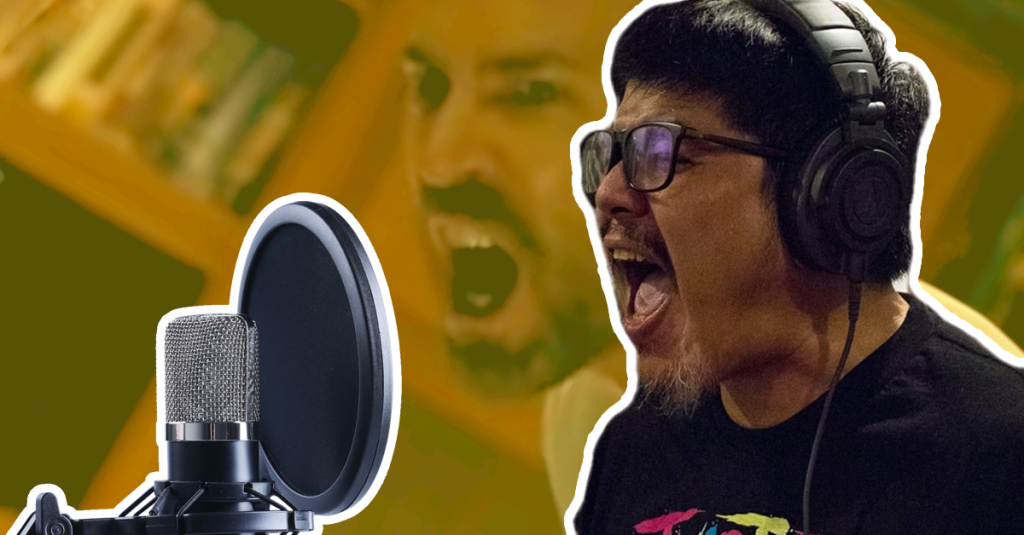
What do Ryan Reynolds, Gerald Anderson, and Choi Woo-shik have in common? They have all been dubbed by voice actor Cyrus Fernandez.
Cyrus has been in the dubbing industry for over 10 years, doing everything from voice acting, to writing scripts, to directing dubbing projects. He’s been the English voice of Pinoy soap stars and in K-Dramas like “Our Beloved Summer,” the Tagalog voice of Ryan Reynolds for “The Adam Project,” and so much more. Chances are you’ve heard his voice without you even knowing it.
“It’s creative but it’s also very, very technical. You’re doing five things at once: Deliver your line, consider your voice, read the instructions, get the timing, and capture the emotion,” Cyrus says. “But I like the challenge. Being a voice actor is like being a musician, you go out there and perform.”
Roots in rock
Growing up, Cyrus first learned of the media industry through his father. “I’m the son of a journalist, Rudy Fernandez. The writer, not the actor,” he quips. “Later in his career, he worked in agricultural R&D and did consulting because that’s where the money was. He once told me, ‘Alam mo sweldo ng media? Gutom.’”
The lesson he took from his dad? Your passion needs to be matched by your diskarte.
While studying Development Communication in UP Los Baños, Cyrus listed four goals: work at NU 107, get into dubbing, write for Pulp magazine, and become a WWE color commentator. (Spoiler alert: He’s done the first three already.)
“I first worked for our [UP Los Baños] university radio, DZLBFM 97.4 – a small operation, but I absolutely loved rock music,” he recalls. “The next logical step was gunning for something that fit with my love for broadcasting and music at the same time. That was NU 107. Immediately after college, I went to the station, did a demo, submitted a resume, and surprisingly they got me.”
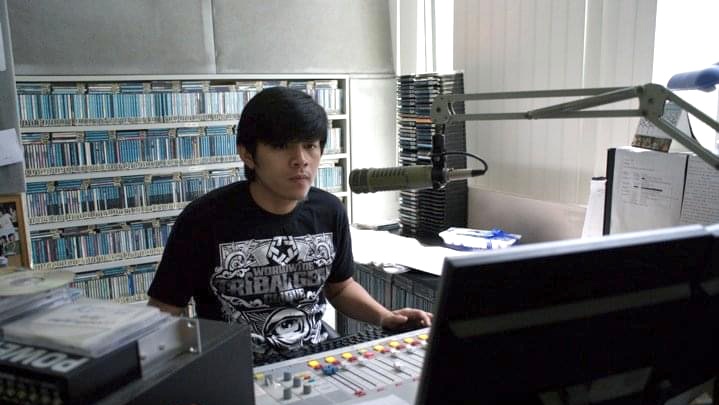
Cyrus the Virus, his DJ name was. Surrounded by workmates just as passionate about music as he was, interviewing rock legends and up-and-coming bands, he was on a high. That is, until NU107 closed down in 2010.
He says: “It was the dream. But what happens when the dream ends and you wake up?”
As luck would have it, a door into the voice acting industry opened before NU107 closed. “In our industry, you’re usually discovered via referral. But my path into this space was that I was brought in by a musician, of all people: Francis Reyes,” Cyrus says, referring to the guitarist of The Dawn. “I was on board one day and he was like, ‘there are auditions at the studio.’”
Going from DJ to dubber turned out to be a path that many in the radio industry explore. “Some people go into hosting and on-cam work, some work behind the scenes like in dubbing,” Cyrus says. “Both are driven by passion. Whether you’re on screen or behind the mic, you’re driven by your desire to stay in a space where you get to be creative.”
A bag of voices
The acting teacher Sanford Meisner once said, “Acting is the ability to behave absolutely truthfully under the imaginary circumstances.” Voice is done not in the stunning locations where the film crews shoot, but in a small sound booth – air conditioning cranked up, lit by harsh fluorescent lights. Instead of elaborate costumes, voice actors are more likely to sport a hoodie and sneakers. And yet, with their voice alone, they transform themselves and transport audiences.
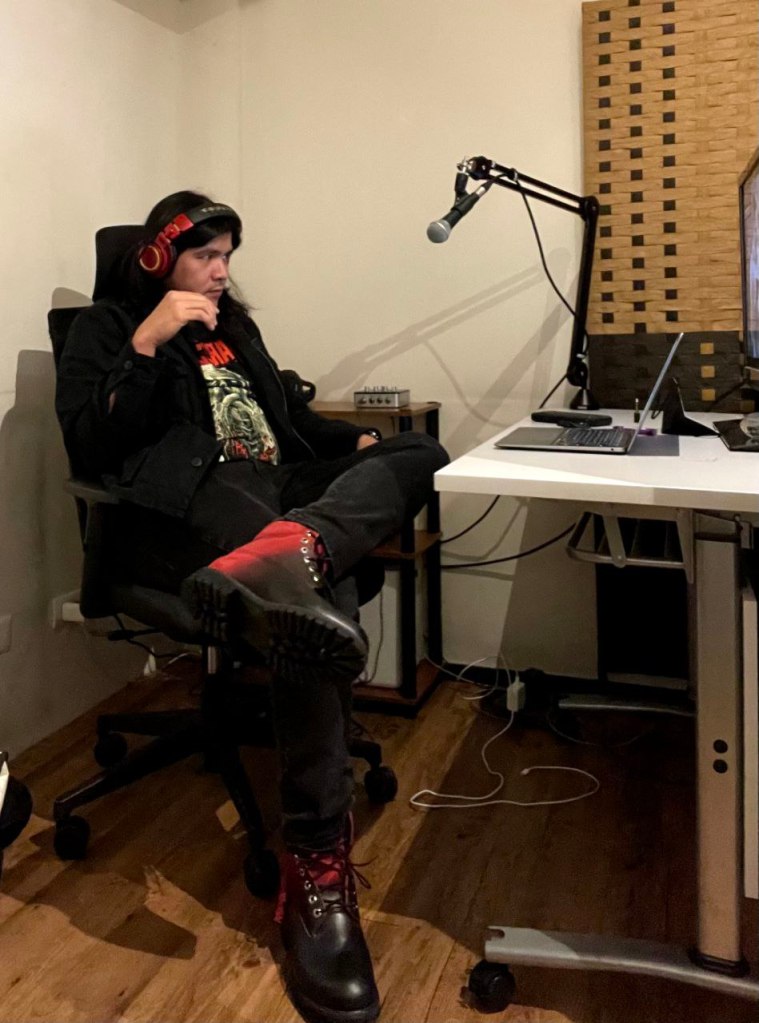
“Some people go into voice acting and voice work in general, because of practicality. It is a pretty good gig. But it’s hard – harder than some realize,” Cyrus says.
“Some people think voiceover work and voice acting are the same. You can be a veteran in voiceover, doing it for commercials for years, but they’re a different beast. You’ll still face the learning curve,” he says. “Kapag nagboboses ng commercials, free rein apart from the overall length of the ad itself. When it comes to dubbing, you have to match the pace of the original actor.”
“Then, you need the ability to sustain the voice you’re doing,” Cyrus says. “Then you need the ability to read, read. Aside from the words itself, there are directions to pause or indicators to cry,” he shares.
When you hear Cyrus’ natural speaking voice, it’s easy to see why he was cast as Ryan Reynolds’ character in “The Adam Project.” It’s high, energetic, a bit sarcastic — much like the Hollywood star himself.
But voice actors are also expected to have range. “When you’re a rookie, if you can act, do the timing, that’s good. But for longevity, you need to have a bag of voices,” he explains.
“Old man, young boy, best friend, comedic characters,” Cyrus says, rattling off his own bag. “I prefer being the comic relief, because you can play around the character more.”
“The furthest from my natural voice would be characters like burly men. But I like the challenge also. You get to test your limits. If you manage to do a voice that’s not in your regular rotation, when all’s said and done, you develop that and that’s now in your bag,” he says.
“A favorite project I worked on was a Colombian series called ‘La Reina del Flow.’ I don’t necessarily like the genre, but that show helped me appreciate reggaeton more,” shares Cyrus. “It’s nice because the soundtrack was on point. They were actual songs. My character was an up-and-coming musician in the 1st season, and an established musician in the 2nd season.”
“One thing I’ve learned is that telenovelas around the world have the same tropes: Amnesia, check, evil twin, check, kidnapping, check!” he says with a laugh.
Speaking success into reality
Cyrus has come a long way from his days as a DJ, and looking back, he sees how it all connects.
“Having that background in music helps me. I get to spot the rhythm of how someone talks,” he says. “And when you’re a dubbing director, it’s not just a matter of going into the studio and monitoring it. You have to do admin work, build your own voice acting cast, assemble your writing team, schedule sessions, and coordinate with management. It’s complex but I quite enjoy it. I think I got that from the time when I was organizing gigs at Saguijo, Route 196.”
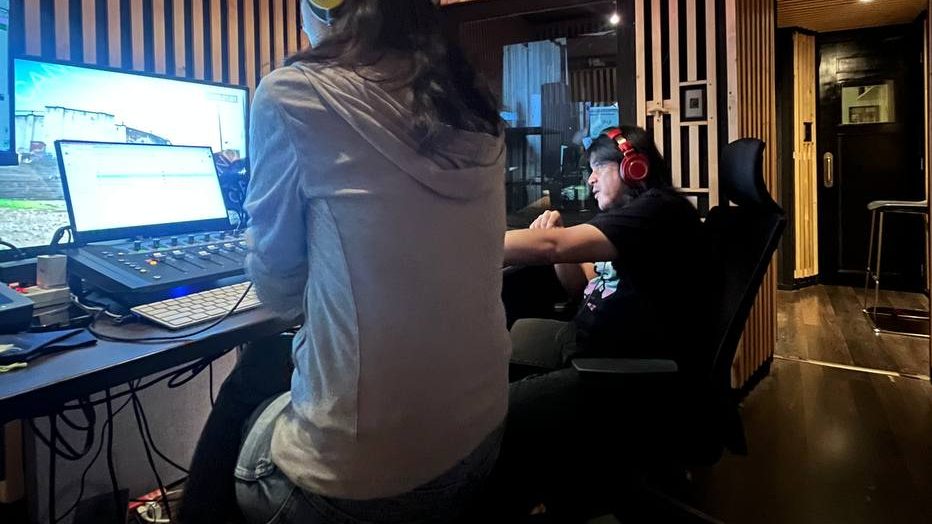
“Some elements of my previous iteration of Cyrus didn’t go to waste,” he smiles.
What about dream projects? “My ultimate goal is to voice Deadpool in Tagalog. If it happens, it happens. If it doesn’t happen, it is what it is. I’d be happy to even just write the Tagalog script for that project,” he says.
However, his metric of success isn’t whether it’s a Hollywood or “big time” project. Instead, he asks himself: Did I enjoy? Did I feel challenged? Did I try something new?
“Success is creating something that will outlive you,” Cyrus reflects. “I think all creatives have that. Whether you’re a musician, a writer, or an actor, there’s the thinking that I have to come up with a magnum opus, something good that will define me.”
“The opportunity to work with different talents and individuals, wow, that’s what I really appreciate now. Especially now that I’m directing dubbing, I get to watch this great collection of talent,” Cyrus says. Aside from voice acting, writing, and directing, Cyrus is also conducting personal writing workshops to develop the talents of others in the industry.
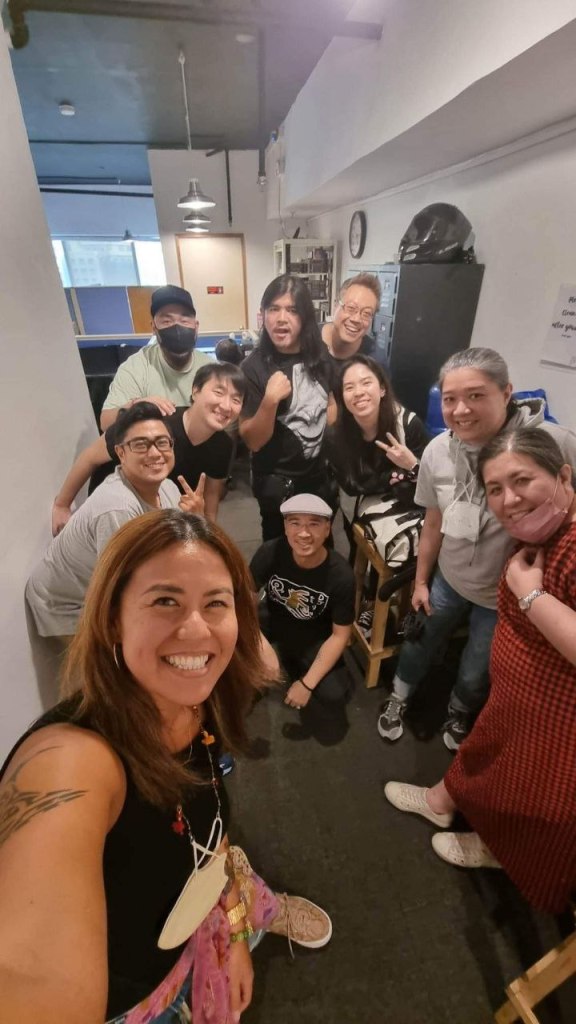
Through it all, Cyrus’ north star remains the desire to create, coupled with the diskarte his dad encouraged him to have.
“My advice for anyone wanting to work in voice acting is to be ready for the uphill climb that goes with it. If you don’t get a project or opportunity, don’t mope – use that time to look for other windows. Baka di mo ma-realize may door na bukas for you, tapos paglingon mo sarado na,” he says. “Hindi ka agad la-landing sa position na marami kang projects. So especially if you wanna do this full time, you have to be ready to fight through.”
 Journalixm