
Approx. reading time:
Every Christmas when the extended family came over, I’d finish my dinner and lock myself in my room almost immediately until they left. Something about their overlapping conversations set off alarms in my head. It goes without saying that I’m not the biggest fan of the season. And that extends to the endless amount of hallmark movies.
As another entry into Shark Bites–the series where I cover twentyish-year-old relics that were formative to an old older generation–I had to watch and write about Love Actually. I thought it was high time I hung up my Grinch persona for a while and gave this Christmas thing another go, in the spirit of doing my job.
Love Actually opens with what I understand to be an iconic scene narrated by Hugh Grant. “Whenever I get gloomy with the state of the world,” he says, “I think about the arrivals gate at Heathrow Airport,” partnered with shots of people returning home to their loved ones. The monologue concludes with the line, “Love actually is all around.”
That is the line the film is slanted on. This intertwined anthology made up of nine stories spotlights the many forms love can take, hoping to unravel some greater, universal truth.
So what does love actually look like? Apparently power dynamics, infidelity, and just a dash of real connection.
My take is that this film is half good, half holy-shit-did-he-just-confess-to-his-best-friends-wife. The good moments can be genuinely sweet. Liam Neeson’s story, where his character helps his step-son confess his love for his crush, shows the two overcome the grief of their recent loss by finding new love. We come back to Bill Nighy’s character here and there, and as the only plotline that displays platonic love, he comes to the realization that Christmas should be spent with the people he most cherishes. Martin Freeman and Joanna Page’s segments were a fun watch; nothing more than a respectful and lighthearted conversation between two people acting as porn stand-ins.
The major highlight for me and most people I’ve spoken to was Laura Linney’s story. She pursues a romantic relationship with a charming coworker but ultimately cannot fully commit as her responsibilities to her brother take precedence. Rather than being cast as shameful, regrettable, or anti-romantic, her decision to forgo a relationship was a stark, matter-of-fact reminder of what love actually is: a giving of the self for the sake of another’s well-being and happiness.
These stories paint a picture of love that is endearing and encouraging, if slightly unexplored. Unfortunately there are five more plotlines that share the spotlight, and I hate to think that these remaining five might be the “actually” in Love Actually for the filmmakers.
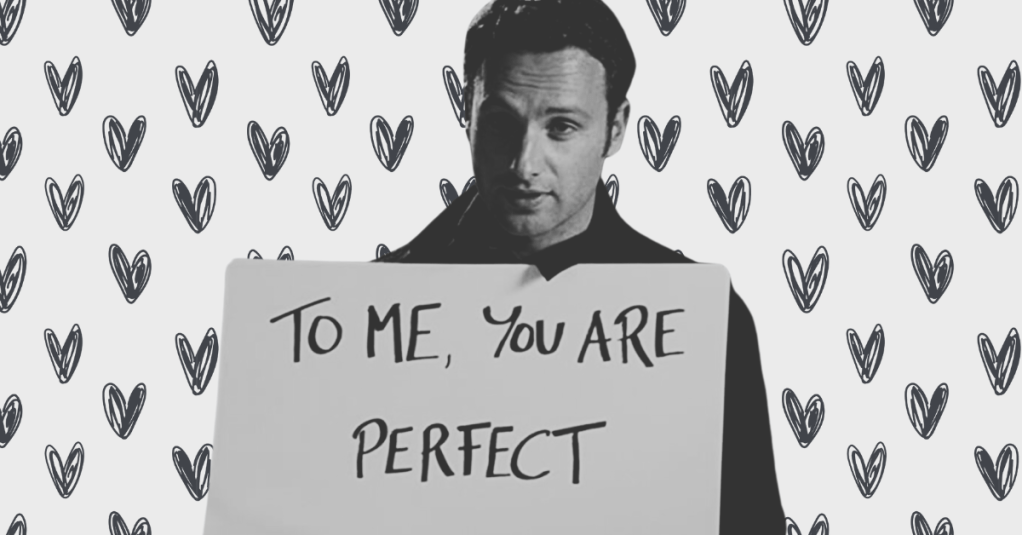
Starting with the most discussed, Andrew Lincoln’s character Mark is secretly in love with his best friend’s new wife whom he never speaks to. He creepily films her on her wedding day and confesses to her on Christmas, which she then reciprocates with a kiss. Read that back to yourself.
Then we have the two power dynamic stories: Alan Rickman cheating on his wife with his young secretary, and Hugh Grant (bless his gorgeous eyes; they got me through this movie) as the newly elected prime minister who is secretly in love with a junior staffer. These power fantasies have male gaze written all over them, to the point where you start to wonder if there were any women in the writers room.
The women in these stories only exist in relation to these men; they are written to be objects of desire, worse especially in the case of Mia who is portrayed as a scheming mistress literally dressed in a devil costume at one point, having complete control over her poor boss who knew none the wiser.
The last two plotlines don’t do any better with their portrayal of women either, with Colin Firth’s character proposing to a woman he’s never had a conversation with, and Chris Marshall’s character flying to America to use his English accent to woo blonde American girls. Again, objects.
My final, admittedly more stupid gripe with this film is its title.
Though a film title doesn’t have to wholly dictate the themes of the film, when you call your movie “Love Actually”, it implies a sense of revelation, of unwrapping love to show its truest form. And while no one piece of media can truly capture love as a whole, this movie sprints in the opposite direction by choosing to do nine stories, almost all half-baked.
There are no real nuances to their dynamics–no complex motivations behind every action. There is no push and pull to be found in conversation. There is little sacrifice. Yes it’s a romantic comedy, but can’t romcoms have deeper narratives too? If “love actually is all around”, why did they choose to highlight what they did, and why only to this level that barely broke through the surface of what love actually could be?
Something I’ve learned more and more with each entry into Shark Bites is the massive shift in perception between generations. I can watch this movie and gawk in disbelief at half of the scenes while someone older will react differently. Maybe they’ll feel nostalgia, comfort, kilig, or maybe they’ll gawk in disbelief at the other half of the scenes.
It’s all valid, obviously. Who am I to tell you how pixels arranged in a pattern on a black screen that change every 60ths of a second should make you feel. But it does help to keep an open mind to how other generational lenses work. Not necessarily to be convinced, rather to understand how the priority in our beliefs change; how to approach them bearing in mind the human behind the lens.
From my lens, I wasn’t a fan. When the film ended, I didn’t sit and think about any particular conversation. No one line shook me to my core. No one scene made me reevaluate how I view my relationships. That’s what love, actually, should do, right?
 Journalixm