
Approx. reading time:
This piece is a refined transcript of a talk delivered by Mikael de Lara Co at the Philippine Association of National Advertisers (PANA) General Membership Meeting on April 24, 2025. Drawn from his background in literature, philosophy, and political communications, the essay explores the emotional and ethical core of storytelling in advertising—arguing for a shift from transactional messaging to deep attentiveness, empathy, and the recognition of the Seikatsusha: the whole human being behind every audience.
I’d like to start off with some candor here, because I just now realized: My literary and political communications credentials, slightly an overkill in the introduction, obscures the fact that I am relatively (actually very) young in this industry. So to be given this honor just barely a year after coming on board at IXM is something that I’m truly grateful for. I’m grateful to Third Domingo, our Chair at IXM Hakuhodo, who recommended that I talk, and to PANA of course, Sir Bobby and Ken and the team, for, I suppose, taking Third’s word for it. I can only hope to do your graciousness some justice.
That said, despite my rookie status in the industry, I’ve spent many, many years as a student of language, of philosophy, of the philosophy of language and storytelling and feeling. And that’s the lens with which I’m going to approach our talk today. Hopefully there’s something to be learned here; hopefully it can be a welcome interruption from the usual lens we use in the industry to talk about storytelling.
I say this because my main problematique today is not to prove that storytelling works, or to shed further light on its importance. I’d like to talk, or at least begin, actually, about the why of it. Why do stories move us? What is it that happens inside us when we see a powerful story unfold? Suffice it to say that this is not a how-to guide; it’s more of an excavation of the nature of the story, and why they move us so.
I like to structure these kinds of talks around a series of assertions. I have ten such assertions today. The first being: We are human.
I understand how it might seem as if this is a truth that does not need saying. But I say it not out of gratuitousness, but to interrogate what makes us human at all. Two and a half millennia ago, the ancient Greeks posited that what makes us human is our ability to reflect, which is to take stock of our own narrative; to understand that we are beings in this world; to be self-aware of the context that surrounds us. Now some might argue that there are animals that can exhibit a rudimentary form of such. But I think we all understand that largely, it’s this capacity for reflection, the capacity to view ourselves as situated within a context, both spatially and temporally, that’s allowed humanity to progress, form societies, and dream forward.
But here’s the second assertion: We are humans often estranged from our own humanity. We’re not always attuned to it. This is not an indictment but a statement of fact. It would be hard to function if every waking moment we are asking “what is life, why am I here…” We need to watch the baby, fry an egg for breakfast, cross the street, write copy, lay out a digital post. It’s natural to park this awareness of the deeper self in order to functon, to survive.
But the fact is, if this humanity– this existence as a being situated in the world, that holds an individual history and has dreams and aspirations– if we can forget that of ourselves, sometimes even neglect it– then perhaps it’s even easier to do so as regards to our fellow human beings. Mas madali lalong makalimot sa kapwa. And we have all been sometimes, in one way or another, guilty of this: We snap at a waiter that’s taken our order wrong; we can be dismissive of the ideas of our colleagues. Or in a broader more industry-related sense– we think of our markets as mere consumers, target audiences, numbers on a chart. And again, this is not necessarily wrong; after all, these details compose some dimension of our humanity. The problem begins, I think, when we reduce people to that singular dimension. As the careless waiter. As the lazy junior copywriter. As a member of the demographic we’re trying to reach. I’ve heard this before, the stereotypes– “A basta youth dapat maingay, dapat tsug-tsug ang music…”
Let’s park that for a while; we’ll return to it later. For now, I’d like to explore further this pathway of thought: The idea that we sometimes are forgetful and get estranged from the fact of our humanity.
I assert this to alert us that sometimes, despite our forgetfulness, despite our estrangement, there are moments that we are startled back to the realization that we are human. And often these come in moments of deep feeling. That kilig moment, watching a sunset with your crush. Or summiting a mountain with your group of friends and realizing, at that moment, that in a few years everyone will fade, will have bigger responsibilities, will have families; that this will never happen again; that this is the literal and metaphorical peak of your experience as friends. Or maybe a simple dinner over your dad’s favorite dish. And then you are startled to the fact that he’s gone, that he passed during COVID. These alert us into our existence as humans.
Why? Because most of the time, we live at the edges of ourselves, at the surface. We function, we plan, we perform. We navigate a routine social weather. But deep feeling—the rare kind that slips past explanation—ruptures the surface. And what we find there, what we find beneath the surface, is the one who is feeling. That self that is not just a mind with tasks or a body in motion. But a conscious self.
And that conscious self, inside of it, is a vastness, an infiniteness, a complexity. Malawak, matinik ang dibdib natin; it’s a field tilled by all our past memories and hurts and triumphs and relations, a self that bears an individual history, a history of all the things you ever thought and felt since you began thinking and feeling, that is an agglomeration of every dimension of ourselves that is aware of that long history. Many will have encountered the term in their college philosophy classes: interiority.
And here’s the thing: Often, in these moments of deep feeling, what we also realize, what we ask ourselves is: Has anyone else felt like this? Can anyone else truly get the exact thing happening inside my chest right now? We ask because the vastness, complexity, and infiniteness inside us also means that it is singular, unique to you as a human being: No one has lived in your body, no one has experienced the exact same thing as you have from where you are, no one else has gone through your life with its long thread of small moments which all provide context and architecture and perspective for what you are feeling now. What we are startled to is the fact that only I can feel what I’m feeling in the way that I’m feeling it. You might remember the telenovela teenager lashing out, saying, “Ma, you’ll never understand, I love Nathan!” Yes, no one else can understand, you feel the uniqueness of the feeling, you feel how your vast interiority reveals an inevitable and absolutely human solitude.
It’s a solitude because you feel it can never be shared as you would on social media; and it cannot be shared because, it seems, words cannot contain it. The Mom would say, Ok, explain it to me, tell me who this Nathan is. And the teenager responds: A basta! Language bumps into its limits. And so we fall back into cliches that have already become hollow in meaning. “I just love him.” Or, for example, seeing that sunset, or summiting that mountain, you just want to scream, release a single vowel into the ether. Or in that dinner with your dad’s favorite dish– no words, just a single tear trailing down your cheek.
Or when, for example, you see infants being excavated from the rubble in Gaza. Or when you go to the S-21 prison in Tuol Sleng, in Cambodia, when you see the pictures, the paintings, the rows of skulls of human beings. Or when you read a book about a kid named Love-love who was still holding her father in an embrace when people who introduced themselves as cops came into their house and shot him– in fact, Love-love, if I remember correctly, could not speak for months after such a traumatizing event. When you see this, when you hear the stories, isn’t the first gesture to cover our mouths? As if our hearts were melting inside of us, as if what’s inside of us was brimming, spilling out our mouths, and we do not have the words to hold it aloft, and so we cover our mouths. Language meets its limits, and so the first impulse is silence.
And yet, and yet, even in that silence—maybe especially in that silence—there’s this pull, this ache to still say something. To try. Why?
Because even if we know it won’t be enough, something in us hopes it might be received. That the attempt itself might reach another. Because, maybe, maybe someone, somewhere, might feel the same sudden pressure in their chest and say, “Yan, yan mismo yan yung naramdaman ko.” The gesture of trying to reach, that ache and desire, in itself holds the potentiality of communion.
So the impulse toward silence is a threshold, and crossing it requires something like faith. The courage to build a bridge we know might fall short—because we are humans alone, humans who feel this deep and inevitable solitude, and none of us wants to be alone. So we try to find the words. An image. Signs that can be understood by another.
Of course we know that not all language reaches. No one gets any points for just rambling on senselessly. Especially in this industry. It’s not just about trying—it’s about how we try.
Some language merely performs, some postures, fills space, sometimes even serves an agenda to the detriment of truth. But the thing is: if we attempt language in the belief, in the faith that it can reach, truly reach another, believe this, then we must ask—who are we speaking to? And we know, we feel the inadequacy of responding by merely saying, Female, 18-30 years old, etc… we know that that story is incomplete, and we know because we too have stories, and mine cannot be reduced to male, 42 years old.
We realize now the language that moves—the language that meets the other—that kind of language comes from dwelling. From pausing long enough to feel the fullness of the being on the other side. Being attentive to their entirety, and not just their needs or buying habits or online behavior. The entirety of them: their grief, their humor, their memories, their contradictions.
In Japanese, at IXM Hakuhodo in particular, we call this person, this whole person, by a very specific term: Seikatsusha. The call, the stance, is to see the other not just as a consumer, not just an audience, but as a whole human life. What shapes their day? What stories do they carry? What emotional landscape are they navigating? The stance is, let’s speak to the human with a life, speak beyond the algorithm with a wallet. Because communion happens only when we take the time to truly see the other, and dare to speak from where it matters. That part of us that can say, here, I know, I understand, I get you. We as creatives have to dig into ourselves to truly find that part and connect. I’ve been saying for more than two decades now, in my own literary practice: Poetry is first and foremost an act of empathy. The task is to inhabit the other and feel what they can feel and find the words that recognize that feeling.
And this is where storytelling becomes something more than a tool, more than just placing messages. It becomes a pathway towards communing with our fellow human beings. We do that by crafting with more than just cleverness, although cleverness and humor are part of the arsenal, but with a kind of attentiveness that honors the human at the other end of the line. Here’s an example:
It’s more than just drama, right? When a brand speaks with a precision, an attentiveness to the lived lives of its public, a kind of emotional fidelity, it begins to do more than just tell a story. It enters ours. It becomes part of our internal life. Because it names something we hadn’t found words for yet. The brand that speaks to our interiorities by speaking of that interiority, by reaching out successfully to those thorns and that luminosity that’s crowding the corners of our chests– that brand becomes part of how we make sense of the world.
Here’s another example:
So there, you see it– it begins as if it were just another upbeat, product-forward documentary. But by the end it makes us realize that every gesture we overlook—a quiet meal, a train ride, a teenage love, a mother’s hands, in this case—is the surface of a deeper story. And the moment we start to really see that, to see others beyond mere roles or functions, but as whole people, Seikatsusha with quiet histories, with whole emotional landscapes behind their eyes— our act of creation shifts too. We begin to recognize something in them that feels like something in us. Because how can there not be? We live in a single world. And despite our differences, despite the deep specificity of being alive, we dwell in a shared world, and we all inevitably carry echoes of each other inside our own interior lives.
Let me run you through something we published early in Journalixm:

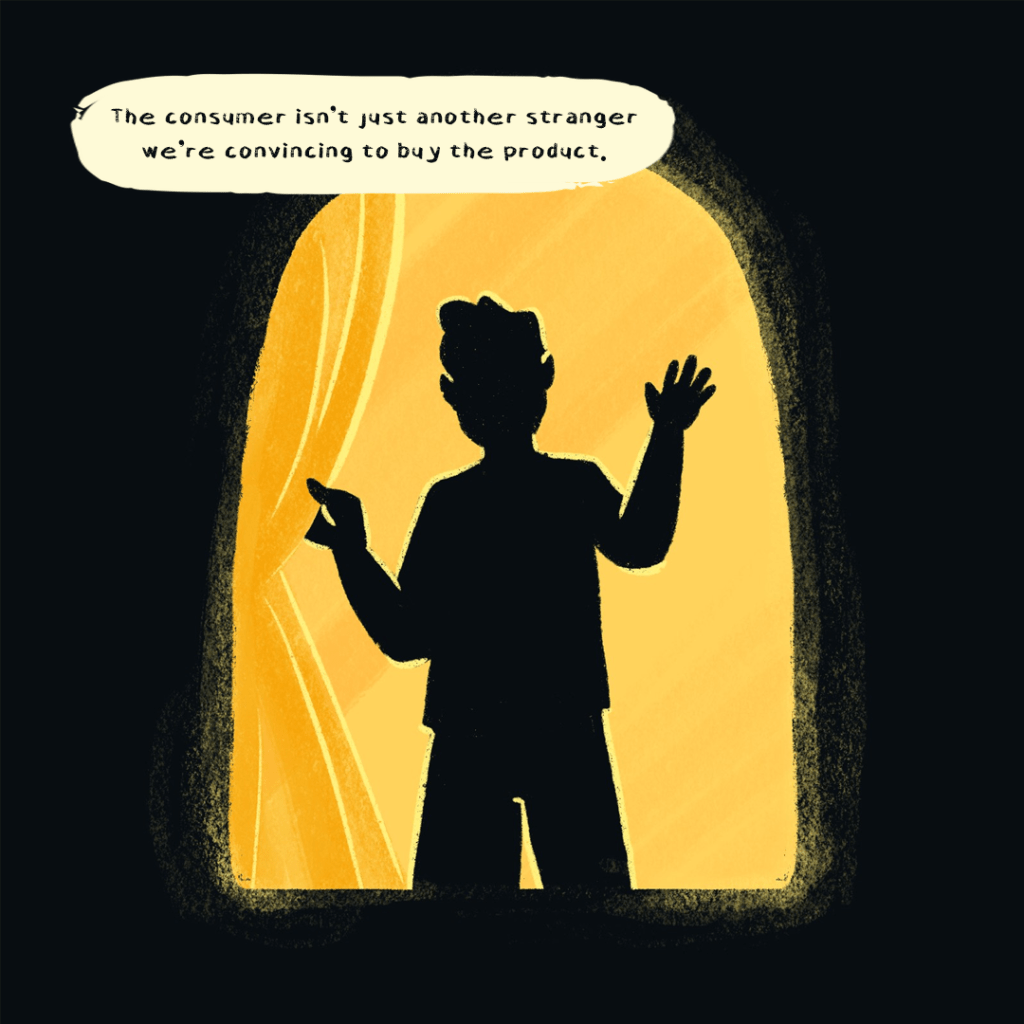
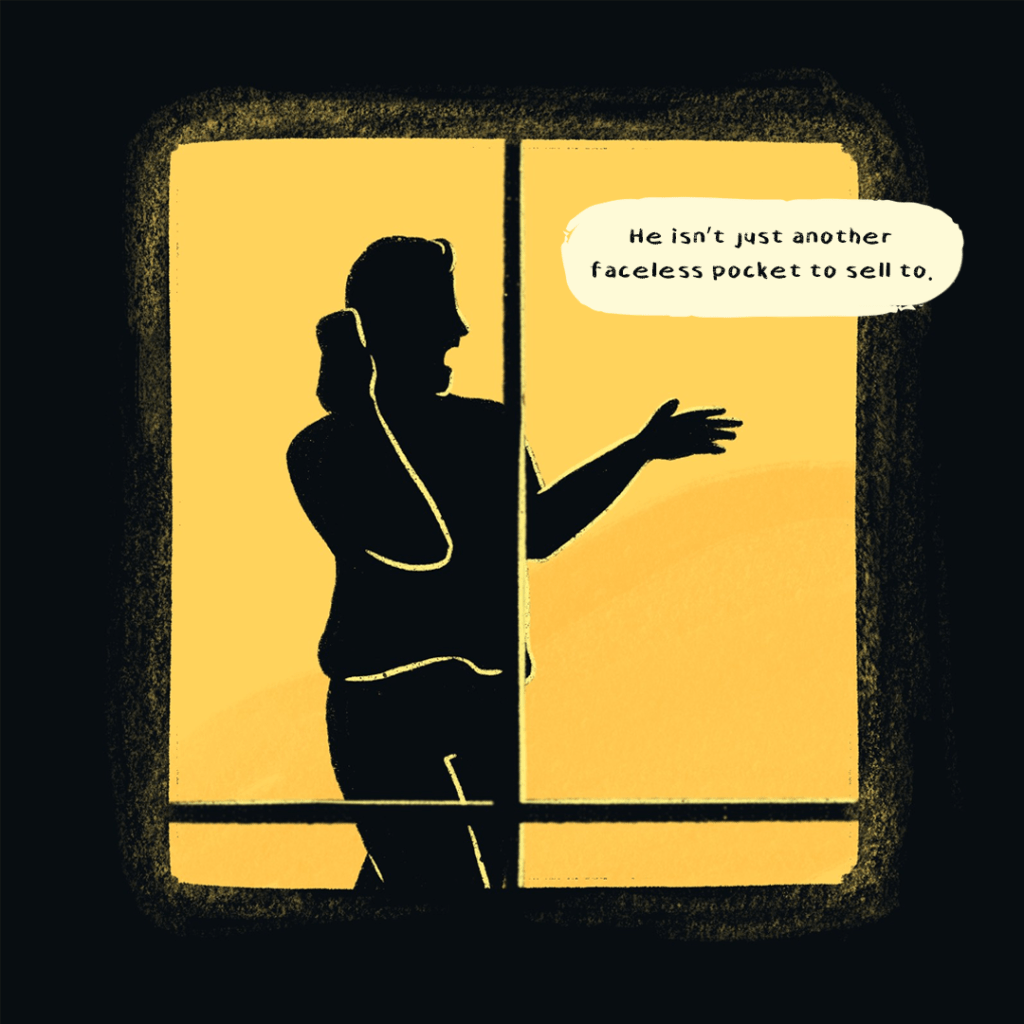
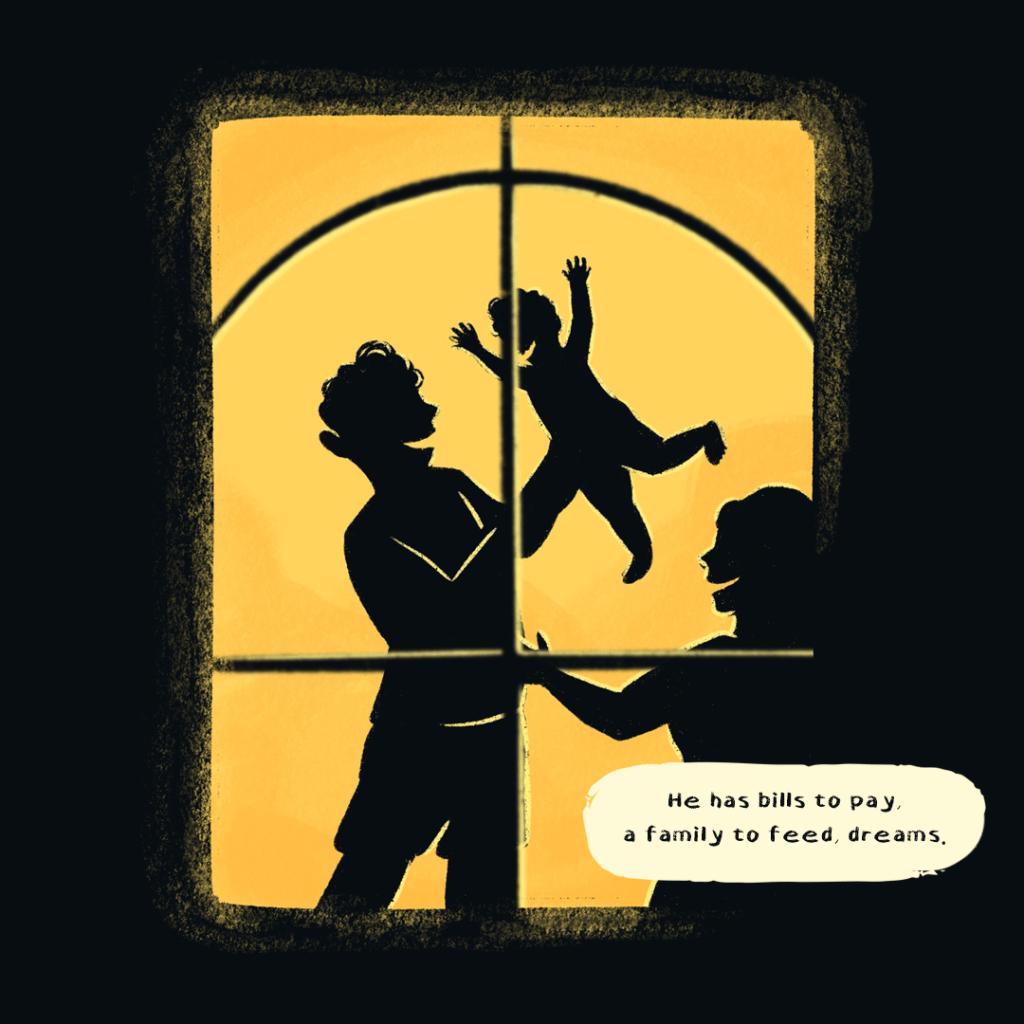

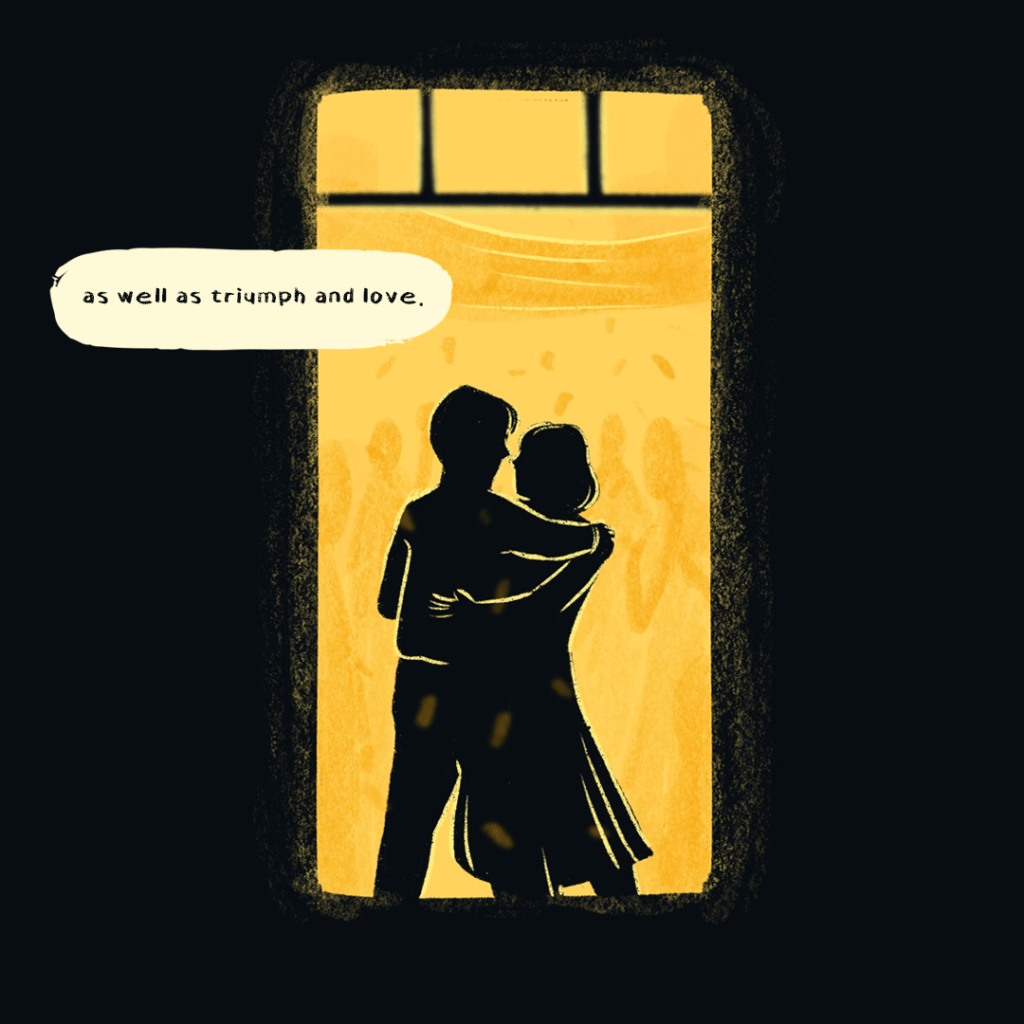
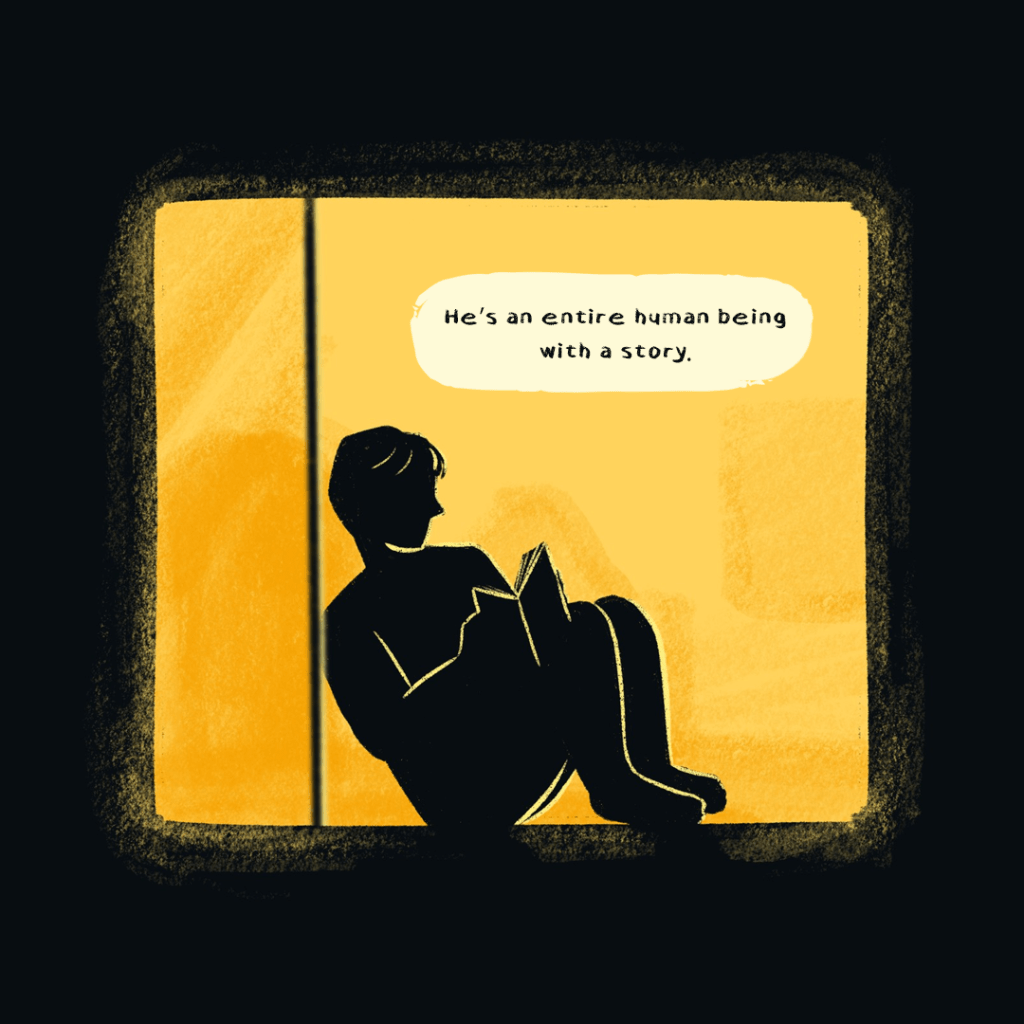
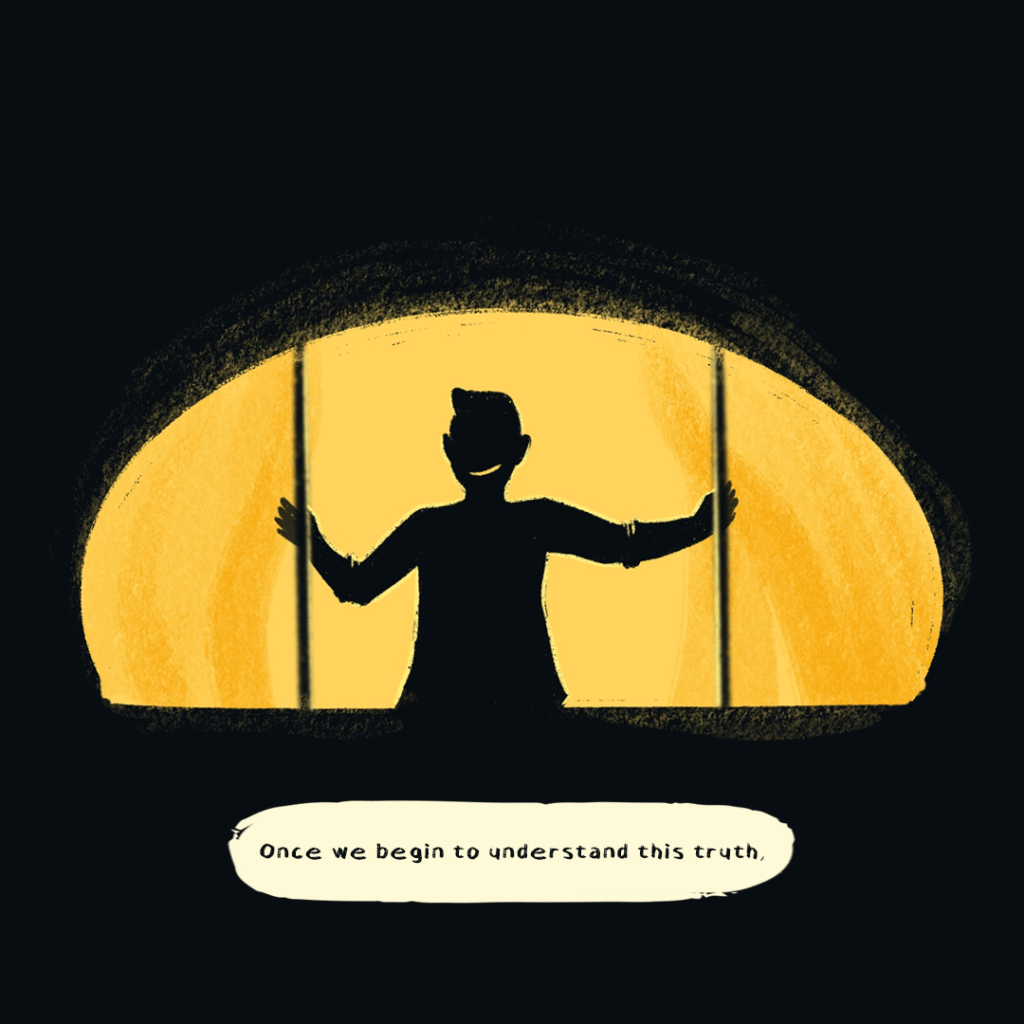
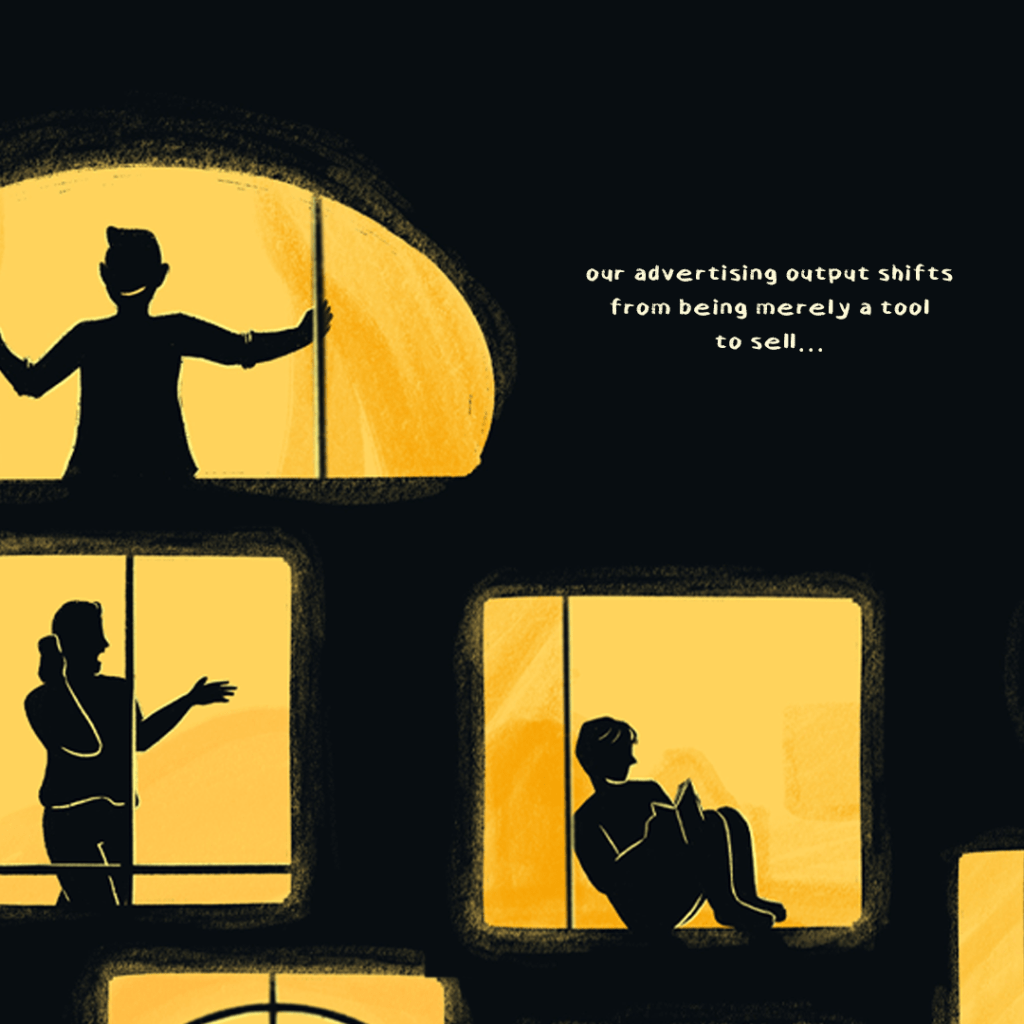
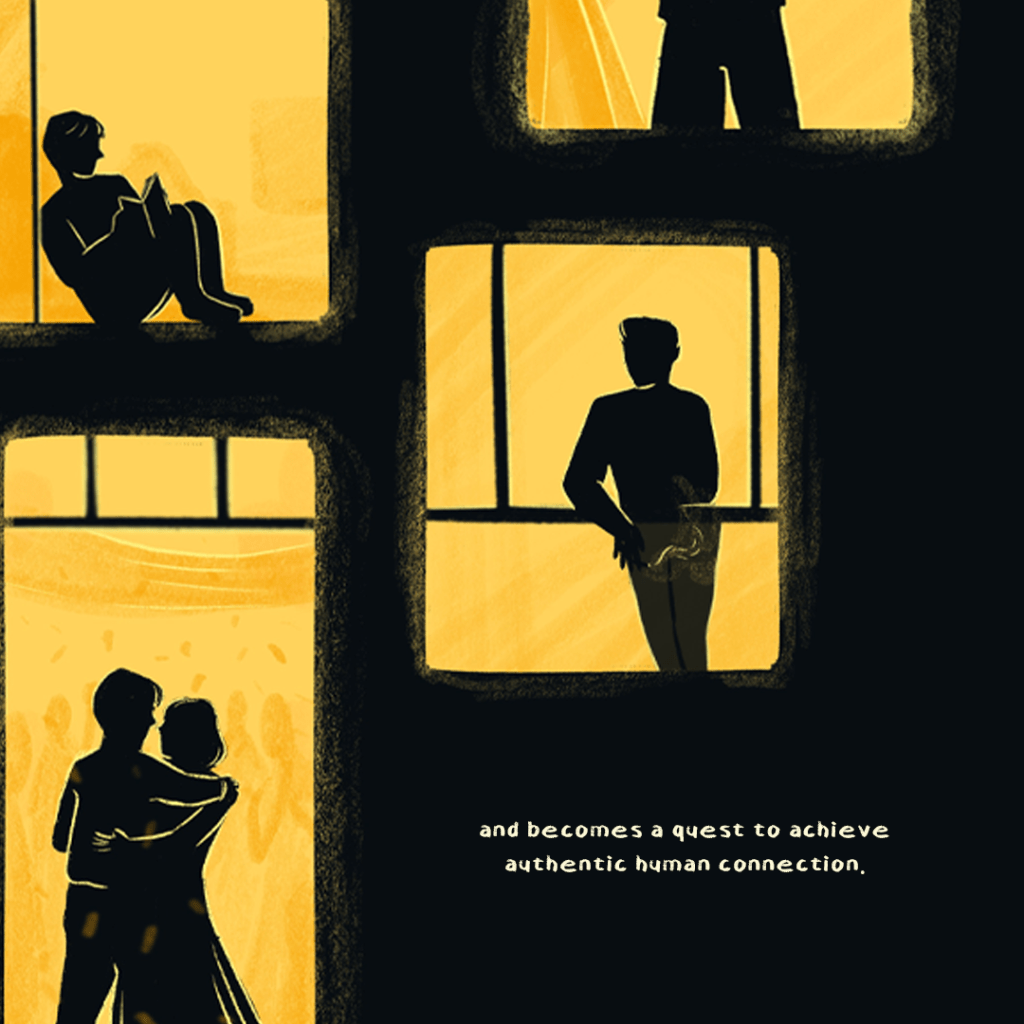
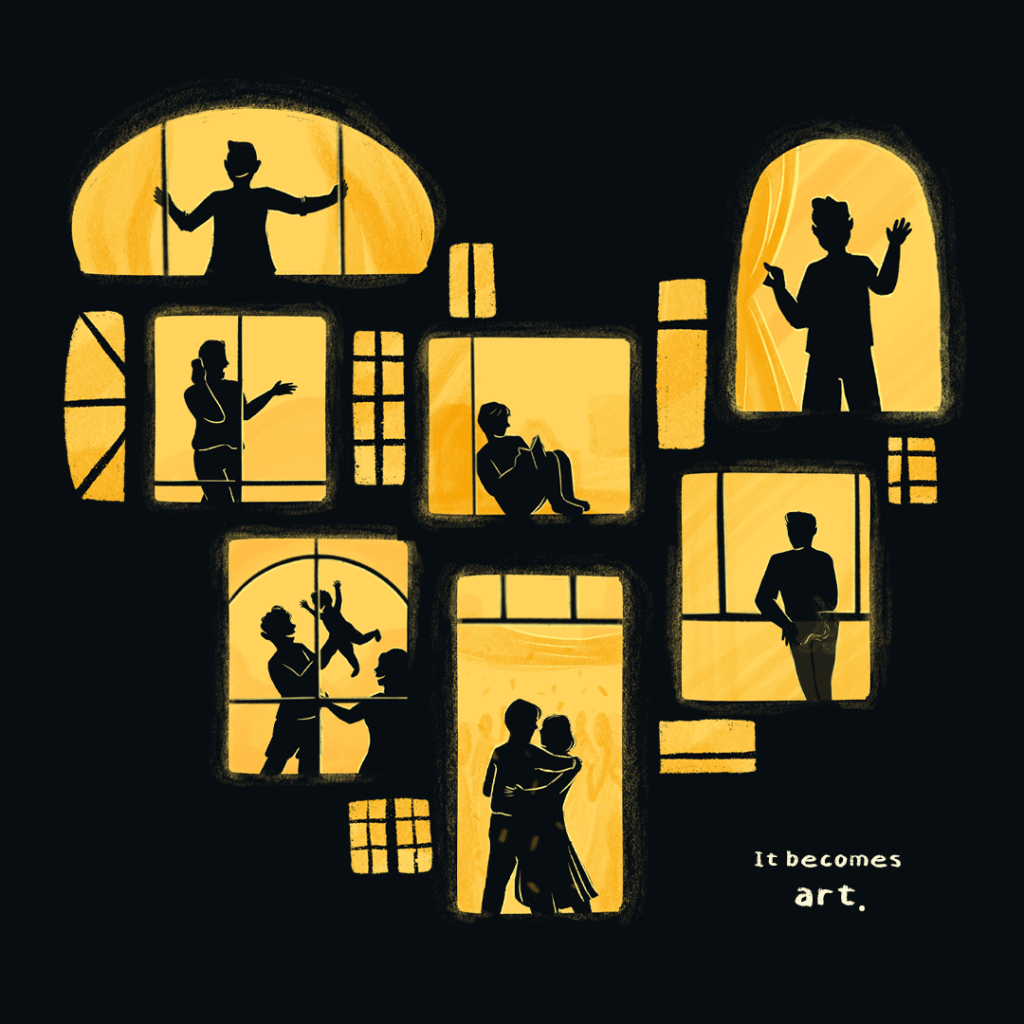
I can almost feel the resistance now. Art? Really? But see, I’ve a question in response to that resistance: How do we define art? How does that induce some dissonance with this job that we do? Because often we see art as opaque, as difficult to understand, antithetical to much of what we do. People should get it, we’ve the lowest common denominator to consider, that’s too deep. That’s something I’ve heard often, surprisingly often given my so-far short stint in advertising.
But see, here’s what I believe. Art is anything that can move us. Anything created that reaches the other. That stretches out from my vast, infinite, complex interiority to that other person there and says: “Hey, you are human, I am human, we are both human beings dwelling in this world. Yes, beneath the brambles, beneath the thick surface of our workaday world, there is a sad and inevitable solitude, but I am here to say that you are not alone. Feel my heart beating too. I can feel what you feel.”
And when we make something—an ad, a line, a story—that does that? That reaches the other? That makes someone pause and feel seen, or startled, or understood? Isn’t that the ultimate strategy? Isn’t that the ultimate form of communication?
Because when advertising tells a powerful story through being attentive to the wholeness of our audience—when it sees the Seikatsusha, the whole human being– the transactionalism of advertising fades. It’s replaced by something that’s more relational. As we used to say in my old life, in my work in political communications: Tao sa tao, puso sa puso.
Not just vote for this or that candidate, or buy this or that product, but a clear assertion: “We see you. We recognize what matters to you. We share something.” That’s affinity, resonance. And when people are seen, they don’t just remember the message; they remember the feeling of being seen. And they carry that feeling forward. In a world saturated with noise, the brand that listens, that recognizes, that tells the truth of someone’s interior world—that brand earns its place inside the public’s emotional life. Because the brands we remember most? They’re the ones that make us feel remembered.
 Journalixm